Inclusive Gym Equipment: Are You Ready to Be First?

Sport England’s Active Lives Adult Survey found that one in five people live with a disability, and that group is almost twice as likely to be physically inactive as the general population, with the gap widening further for people with multiple impairments. The picture in Australia isn’t dramatically different.

Two products on our radar this year tackle that gap in inclusive gym equipment from opposite directions. One rethinks the wheelchair, the other rethinks the bench, and both are now looking for their first Australian gym, council facility or sporting club to say yes. Neither requires a full facility overhaul. Both are asking for an early adopter.

Fortem GymChair Brings Wheelchair Accessible Gym Equipment to Australia

We’ll start close to home. The Fortem GymChair is manufactured in Canada, but as of this year it has an Australian home. WA-based Wild West Wheelchairs has become its exclusive Australian distributor and retailer, the first distributor for the product outside Canada.

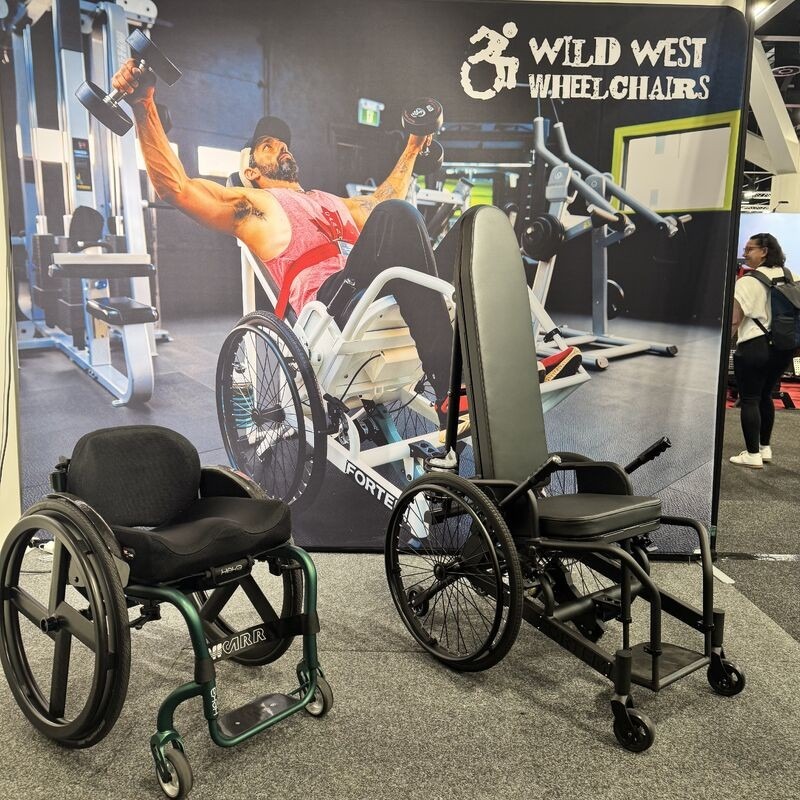
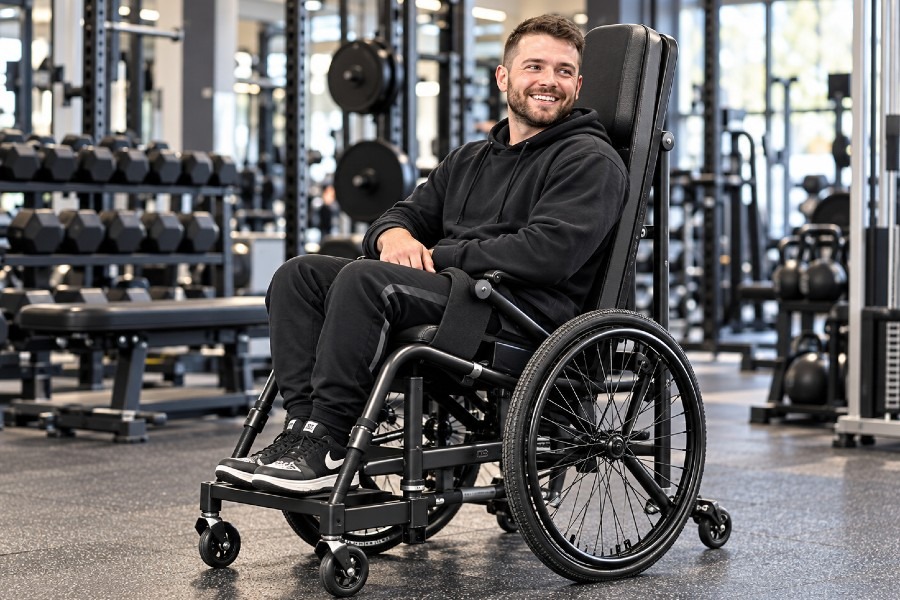
“A standard wheelchair is designed primarily for mobility and everyday activities,” explains Erik van den Berg, part of the Wild West Wheelchairs team. “When a wheelchair user goes into a gym, however, they may need to transfer onto machines, use free weights, reach, push and pull against resistance and move around equipment. Stability becomes particularly important.” The GymChair is built to solve that problem: a dedicated, stable platform for the gym floor, using an ApexAngle tilt system that shifts between a Dynamic Position for seated exercises and transitions, and a 45-degree Performance Position built for heavier strength work.

Erik says the decision to bring this piece of adaptive gym equipment to Australia came from what they saw daily in their own work. “We work with wheelchair users every day, and we saw a clear gap between gyms saying they are accessible and wheelchair users actually being able to participate in strength training.”

inclusive gym wheelchair
weightlifting wheelchair inclusive gym australia

Real World Results for Wheelchair Users in the Gym

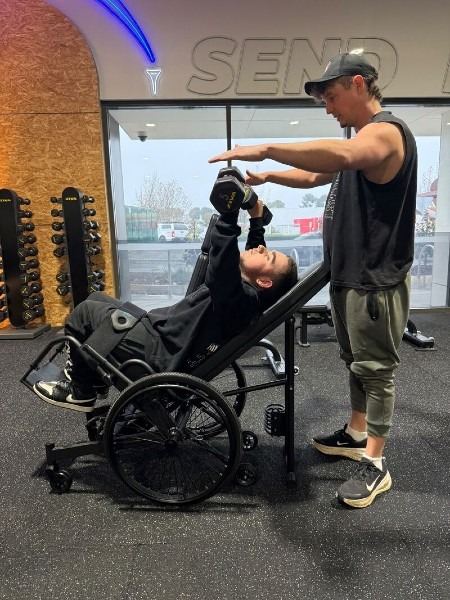
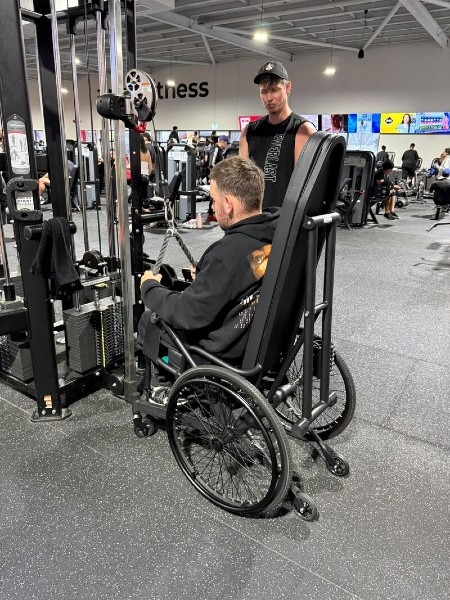
Since taking on the distributorship, Wild West Wheelchairs has trialled the GymChair with one of their own clients at his regular gym. “He absolutely loved it,” says Erik. “His personal trainer was particularly impressed because the GymChair allowed him to access gym equipment that he previously hadn’t been able to use safely or effectively. It wasn’t simply about the chair itself, it was about seeing someone suddenly have access to parts of the gym that had previously been unavailable to them.”

The product has also been demonstrated publicly in Australia for the first time, at the AusFitness Industry Trade Show & Summit in Sydney, where Erik says it “generated significant interest from both wheelchair users and people within the fitness industry.”

Built for Fitness Facilities, Not Individual Ownership

The GymChair retails at approximately AUD $13,000 to $15,000 depending on quantity and shipping, and Wild West Wheelchairs is deliberately structuring the offer around facilities rather than individuals, including exploring leasing options “because we don’t want the upfront cost to automatically become a barrier for facilities interested in becoming more inclusive.”

That reflects the practical reality of the product. Unlike a personal wheelchair, the GymChair is designed to live permanently on a gym floor for members to use as needed, not to be owned and transported by an individual user.

Right now, no Australian facility has taken that step. “We are still at the early-adoption stage in Australia,” the team says. “No Australian gym, council or sporting facility has purchased a GymChair yet, which is exactly why we’re keen to find the right organisation to work with as an early adopter.”

Commercial gyms are their ideal first customer. “We want to demonstrate that wheelchair users can be part of the mainstream fitness environment rather than being directed only towards specialist disability facilities,” alongside council-run leisure centres, rehabilitation centres, and wheelchair sports clubs. Trials are on the table for the right facility.

Para Bench Adapts Existing Equipment for Para Powerlifting

While the GymChair tackles inclusion from the athlete’s side, a UK company is solving the same problem from the gym’s side of the equation, and an Australian para athlete is about to become one of its first users.

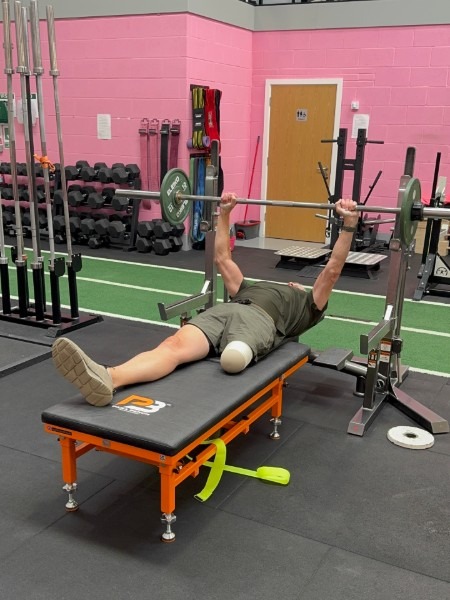
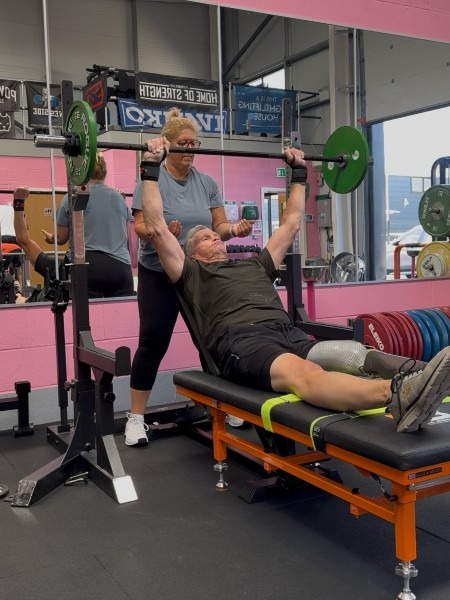
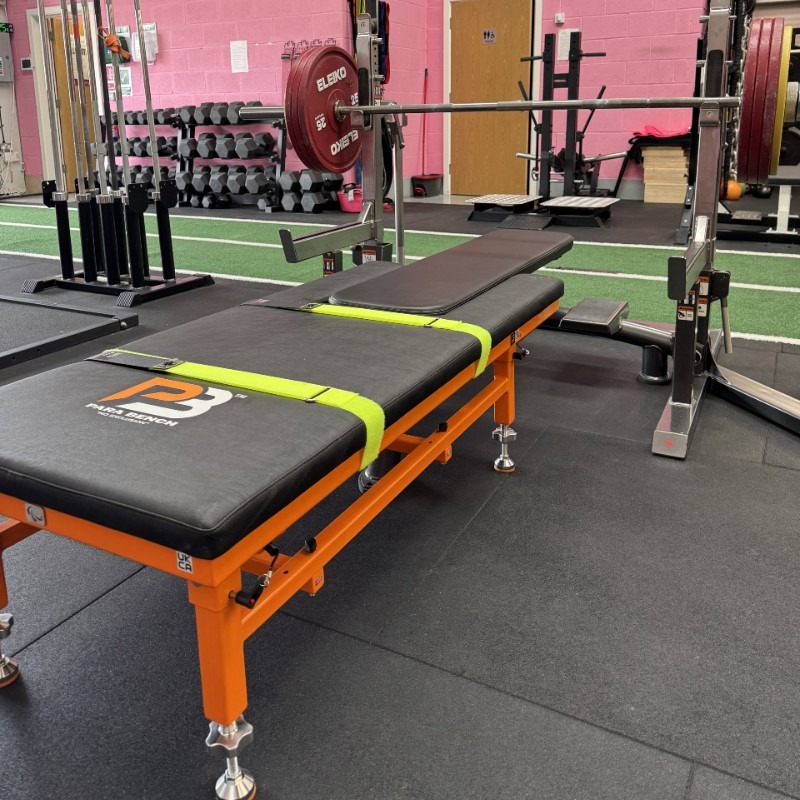
Para Bench grew out of coaching, not engineering. Co-founder Dan Cumberworth, an adaptive strength coach, had a client who had been classified to compete in para powerlifting but couldn’t find a gym with the right bench setup. “The gym could not sacrifice its limited floor space for a dedicated para powerlifting bench,” Dan explains, so he approached his friend Mark Lock, an experienced gym equipment designer. Together they developed a modular extension that turns an existing combo rack into a para-powerlifting-ready bench: removable, compact, and built around equipment gyms already own.

From Prototype to Production

Para Bench has now moved from prototyping into its first UK production run, with the first units expected to begin shipping from October 2026. Testing has taken the product further than its original brief. Athletes and coaches have used it alongside freestanding and adjustable benches to unlock flat, incline and 90-degree seated training positions, and it has also been tested successfully with select seated plate-loaded machines.

Some of the most telling feedback has come from how independently people can use it. “One above-knee amputee was able to assemble and install Para Bench on his first attempt in approximately three minutes, despite never having seen it before,” the team says. “Another wheelchair user was able to transfer onto the bench and reposition the equipment independently.”

Paralympian Louise Sugden also tested the product, describing it as feeling like a standard para powerlifting bench, feedback Dan says “carried considerable weight because it came from an athlete with extensive experience of the specialist equipment used within para powerlifting.”

An Australian First for Adaptive Strength Training

Australia’s connection to Para Bench now has a name attached. Australian para powerlifter Ben Wright has confirmed an order and will be one of the first people in the country to receive one. “Ben has supported the project from an early stage,” Dan says, “and we are extremely pleased that he will be one of the first people in Australia to receive one.”

There’s no formal Australian manufacturing or distribution deal yet. That remains “a decision to be explored over the coming months rather than several years away,” with the team also exploring options in Taiwan as part of a broader international strategy. But the door is open, and there’s a clear next step for anyone who wants to be part of it. Australian gyms, councils, rehab providers and sporting clubs can register interest directly. Registering doesn’t commit a facility to anything, but the team says early enquiries help “measure demand and identify potential demonstration or trial locations,” and interested facilities could be considered as early Australian partners.

For gyms wondering about compatibility, Para Bench is designed for commonly used combo racks but isn’t universally compatible without checking first. It accommodates bench-pad widths up to 320mm and bench heights of 413 to 457mm, and the team asks facilities to share their equipment’s make, model and dimensions before ordering.

parabench inclusive gym equipment australia
parabench gym equipment for disability inclusion

Why Australian Gyms Should Pay Attention to Both Inclusive Equipment Options

For an Australian gym owner, council facility manager or club committee, the takeaway from these two products isn’t “buy everything at once.” Inclusive strength training is now solvable in pieces: some through on-site equipment that supports members who arrive in their own mobility devices (Fortem GymChair), some through facility-side retrofits of equipment already on the floor (Para Bench). Real inclusion likely means paying attention to both, over time.

Both companies made a similar point when asked what they’d say to a gym owner who thinks inclusion is too expensive or complicated.

Wild West Wheelchairs: “A gym can have a ramp, accessible entrance and wide aisles, but if a wheelchair user can’t actually participate in the exercise program or use the equipment, there is still a significant barrier. The cost doesn’t necessarily have to sit entirely with the gym. It can be absorbed across the wider membership base, while at the same time opening the doors to people with disabilities who may currently feel that mainstream gyms aren’t designed for them.”

Para Bench: “Inclusion does not always require replacing everything you already own or creating an entirely separate training area. Start by looking at the barriers within your current facility and speaking directly with disabled people about what would make training more accessible. The important thing is to begin.”

For facilities wanting to get ahead of this rather than wait for a fully mature, distributed market:

  • Enquire about trialling or purchasing a Fortem GymChair directly through Wild West Wheelchairs. Commercial gyms, council leisure centres, rehab centres and wheelchair sports clubs are all in their sights as an ideal first Australian customer, and leasing options are on the table.
  • Register interest directly with Para Bench via their interest form. International registrations, including from Australia, are shaping where they build local manufacturing or distribution next.
  • Talk to your existing wheelchair-using members about what barriers they hit with current equipment. This is exactly the kind of frontline feedback that shaped both products in the first place.
  • If you don’t have any members who use a wheelchair, try reaching out to community groups they might belong to and ask them to share their experiences. You might find a whole new membership base out there just waiting for a facility that is ready to offer a more inclusive setting.
creating inclusive spaces for wheelchair users in gyms

The Bigger Picture for Inclusive Gyms in Australia

As Wild West Wheelchairs put it, “the bigger conversation is about changing the perception of what an inclusive gym looks like. It’s not simply about getting someone through the front door, it’s about giving them the opportunity to actually participate once they’re inside.” Para Bench frames the same idea as its “No Exclusion” mission. Together, the Fortem GymChair and Para Bench are a reminder that becoming a truly inclusive gym doesn’t require reinventing the space. It requires being willing to be one of the first to say yes.

Check out these articles:

shaun krenz ausfitness

Follow the Money: Where Suppliers Are Betting in Australian Fitness

Interview conducted July 2026. Everyone in the fitness industry has an opinion on what’s trending. Fewer people are in a position to say where the money is going. Shaun Krenz is one of them. As co-founder of AusFitness Expo and AusFitness Industry, he spends most of the year building relationships with the suppliers, brands and
Read More »
australian functional fitness equipment

2026 Buyers Guide: Commercial Functional Fitness Equipment in Australia

This guide has been created as a practical resource for gym owners, personal trainers, strength and conditioning coaches, studio managers, and anyone sourcing functional fitness equipment for commercial or semi-commercial use in Australia. Functional fitness training has moved from a niche offering to a mainstream expectation. Whether you’re opening a new facility, upgrading an existing

Read More »
strength training equipment guide for gym owners

2026 Buyers Guide: Commercial Strength Equipment in Australia

A practical guide for Australian gym owners, studio operators and fitness business owners planning a strength equipment purchase. Strength training equipment forms the foundation of most gyms, strength facilities and training studios across Australia. From squat racks and barbells to selectorised machines and plate-loaded equipment, the right strength setup allows members to build muscle, improve

Read More »
eofy tax time fitness business

Take Advantage Of 2025 EOFY Sale On Commercial Gym & Fitness Equipment

With June 30 fast approaching, fitness business owners across Australia are preparing to wrap up the financial year, which means it’s the perfect time to upgrade your gym setup. There are numerous reputable suppliers with a sale on commercial gym and fitness equipment. Smart investments now could be fully tax-deductible, giving your business a financial

Read More »
les mills equipment

SMART TECH: The Les Mills Equipment That Hits Differently

For a long time, the equipment central to group fitness was very slow to innovate. As a world leader when it comes to group exercise programming, Les Mills has been in a unique position to develop cutting edge equipment that integrates seamlessly into group fitness classes, improving safety and delivering maximum results. It’s been a

Read More »
versatility of sandbag training

The Underestimated Versatility of Sandbag Training

When we think of functional fitness and strength training, barbells, dumbbells, and high intensity cardio machines like the Technogym SkillMill might come to mind first. There are also some simple, yet highly effective tools that can be absolute powerhouses for functional fitness workouts such as BOSU, battle ropes and the humble, often overlooked sandbag. Sandbags

Read More »
tony griffin panatta australia

Five Questions With Panatta Australia’s Tony Griffin

WNiF had the opportunity to catch up with Tony Griffin, Managing Director at Panatta Australia at the AusFitness Industry Trade Show and Summit recently in Sydney. Panatta had an impressive range of their industry-leading commercial fitness equipment on display and was drawing plenty of attention from facility owners keen to level up their gym floor

Read More »
functional training with connexus

Get More From Functional Training With Connexus By Matrix Fitness

Functional training has taken the fitness world by storm, and for good reason. Functional fitness moves away from aesthetics and focuses  optimising our ability to perform real-life tasks, providing a far greater benefit over the long term than the reps of the past. Engaging multiple muscle groups at a time and not relying on specific

Read More »
Scroll to Top