
Inside inLIFE Wellness First Franchise Round: What It Reveals About Scaling a Fitness Business

inLIFE Wellness opened franchise applications to the public for the first time since launching in 2019, a milestone for a boutique wellness network that has grown to 60 studios across Australia and the United States without any franchise marketing. Founder Scott Capelin, who has spent 25 years building and operating fitness businesses, built the model to answer a specific question: how does a studio owner scale past one location without losing the culture that made the first one work? That question, more than the franchise mechanics themselves, is what makes the model worth studying, whether or not you ever franchise your own business.

The Real Economics of Scaling a Boutique Fitness Studio

inLIFE’s published numbers are a useful benchmark for what it actually costs to run a financially healthy boutique studio, whether you ever franchise or not.

The franchise information pack supplied to prospective owners puts total start up costs at $200,000 to $220,000, covering everything from Pilates reformer machines to studio fit out and pre launch marketing. Established studios report annual revenue of $450,000 to $900,000, built on 200 to 300 paying members, with the business designed to sustain a 30 to 35 percent profit margin.

Item Cost
Franchise fee (ex GST) $40,000
Reformer Pilates machines $55,860
Machine freight and delivery $6,000
Other props and equipment $10,000
Studio fit out $25,000
TVs, IT and audio visual $9,000
Furniture and amenities $5,200
Rental bond $15,250
First month rent deposit $5,083
Legal and accounting $5,000
Launch marketing and sales $35,000
Total investment $200,000 to $220,000

Capelin points to rent and instructor pay as the two line items that make or break any boutique fitness studio, franchised or not. inLIFE caps studio rent at $90,000 a year, and instructor payments for a full 40 class week run to around $2,200. For the margin target to hold, labour costs need to stay under 35 percent of revenue and rent under 15 percent.

He is candid about where new franchisees usually get caught out. “Most operators can find a spreadsheet that gets them there on paper,” he says. The real risks are labour creep once sick leave, superannuation and management costs are factored in, marketing spend that takes longer than expected to taper after launch, and the pre opening sales campaign, which he treats as a one shot investment rather than a line item to trim.

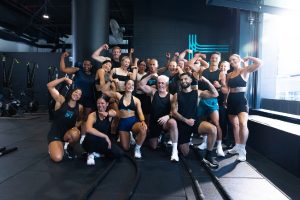
inlife wellness franchise round scaling a fitness business

Ethical Franchising and Growing Without Losing Your Culture

Numbers only show whether a studio can be profitable. They say nothing about whether it should grow the way it is growing, which is the question Capelin says keeps him up at night.

He uses a single test for what he calls ethical franchising. “Would I be comfortable if my own family bought this franchise?” he says. That rules out franchise agreements written to extract fees regardless of performance, territory maps drawn for head office revenue rather than franchisee viability, and onboarding that is really a sales funnel dressed up as training.

Every inLIFE franchisee used to arrive as an insider, an existing member or instructor who had already absorbed the coaching standard and the culture just by being in the room. Opening applications to the public removes that built in filter, which is why Capelin calls it the harder test of the same principle.

“It’s slower than just taking anyone with the capital, and that’s the point,” he says of inLIFE’s screening process. “Scale is only ethical if the studios opening under the brand are still ones you’d send a friend to.”

Why Flat Franchise Fees Change Incentives

inLIFE charges a flat monthly fee rather than a share of revenue: $1,000 for the first three months, then $2,900 for the remainder of the agreement, plus a separate $300 monthly marketing fund and a one off $40,000 territory fee. None of it moves with a studio’s takings.

“With revenue share, head office’s incentive is tied to top line revenue, which can nudge a franchisor toward pushing volume over member outcomes,” Capelin says. “With a flat fee, our incentive is that the franchisee’s business works, full stop, because a franchisee who’s struggling doesn’t renew, doesn’t refer other franchisees, and doesn’t reflect well on the brand.”

He describes it as franchisees not being penalised for their own success. A studio owner who grows membership keeps the upside, rather than handing a larger share back to head office as revenue climbs, and it gives both sides a fixed number to plan around instead of a moving target tied to a studio’s best or worst months. It is a structural lesson worth borrowing even for owners who never franchise anything. Incentives written into any partnership or supplier agreement shape behaviour long after the ink dries.

What It Takes to Run Multiple Fitness Studio Locations

Capelin splits franchisees into three types:

  • Owner operators run the business and also teach classes, the profile of a Pilates instructor ready to open their own studio.
  • Owner managers run the business, handling rosters, billing and instructor relationships, without teaching themselves.
  • Owner investors put in capital and hand day to day running to a manager.

He is blunt about which type struggles most. “The concept of passive income with the studio under management is not as easy as it sounds,” he says of owner investors. Owner operators and owner managers do better, in his experience, because someone with skin in the daily operation catches small problems before they become expensive ones.

The same logic applies to any studio owner weighing up a second or third location, franchised or independent. Someone who has already lived inside the day to day culture and standards, as a member, instructor or manager, tends to protect them better at a new site than someone arriving with capital alone. Capital does not run a good studio. The person on the floor does.

Before running those numbers on a second site, it’s worth stress testing them properly. Our article “Before You Open a Second Gym, Get These Financials Right” walks through the metrics most owners get wrong.

Lessons for Australian Studio Owners on Franchising and Growth

For Australian studio owners weighing up any franchise, inLIFE’s or otherwise, Capelin’s advice starts with the reason for looking at one in the first place. Franchising solves specific problems, mainly access to a proven system, marketing muscle and a support network, but it introduces new ones around autonomy and ongoing fees. An owner who mainly wants better systems for their existing studio may be better served by licensing a system or building their own franchise than by joining someone else’s.

Whatever the model, he offers four questions worth putting to any franchisor, licensor or growth partner before signing anything.

  1. What does the franchisor actually deliver for their fee each month, not what is promised.
  2. Can you speak, unsupervised by head office, to three existing franchisees past their first 18 months.
  3. What does exiting the agreement actually cost.
  4. Is the fee structure aligned with your success, or with the franchisor’s revenue regardless of how you are performing.

inLIFE’s own answer to that last question is the flat fee model outlined above. Whichever direction a studio owner takes, franchising in, franchising out, or staying independent, the questions worth asking are the same: does the model reward the people doing the daily work, and does it protect the culture that made the business worth scaling in the first place.

Check out these articles:

joy in movement franchise

How a Cronulla-Born Brand Sold 80+ Territories Across Australia

Most fitness franchises spend their first few years finding their footing. J.I.M (Joy in Movement) spent its first three years selling out. Since opening its debut studio in Glenhaven, Sydney in July 2023, the infrared-powered, 30-minute workout brand has sold more than 80 territories across New South Wales, Queensland, Victoria and the ACT. There are
Read More »
fitness franchises that could come to australia

8 Fitness Franchises That Could Come To Australia

Franchising continues to drive the growth of the health and wellness industry, and the concepts chasing Asia-Pacific expansion in 2026 look nothing like the boutique studios of a decade ago. With more than 30 established fitness franchises already competing for space in Australia, we went looking for something different: brands that are either talking openly
Read More »
wildsoul wellness pilates franchise

Wildsoul Wellness Is Growing Fast and Its New Precision Health Program Is the Reason Franchisees Are Taking Notice

What prospective franchisees need to know about Australia’s fastest-growing wellness brand and its game-changing new offering. The Australian wellness industry is crowded, competitive, and full of franchises making nearly identical promises. Community. Movement. Recovery. Belonging. The language is familiar because almost everyone uses it. So when a franchise finds a genuine point of difference, one

Read More »
jetts fitness successful franchise

How Jetts Fitness Is Rewriting the Rules of Australian Gyms

Australia’s original 24/7 no-lock-in contract gym brand is expanding fast – and the numbers tell the story. With six new clubs set to open in quick succession and a landmark flagship just launched on the Sunshine Coast, Jetts Fitness Australia is positioning itself as the benchmark for accessible, flexible fitness in a market increasingly defined

Read More »
ultra crossfit brisbane gym owners

Opening a Gym in Australia: Is the Market Saturated in 2026?

The Australian fitness landscape has transformed dramatically over the past decade. Between 2015 and 2024, the number of gyms and fitness centres across the country expanded at an unprecedented rate, driven by boutique studios, 24-hour franchises, and increasingly health-conscious consumers. Now, as we move through 2026, aspiring fitness entrepreneurs face a critical question: has the

Read More »
plus fitness successful franchise

The Plus Fitness Playbook To Successful Scaling

The opening of Plus Fitness Mambourin last month marked a milestone for the brand, which has seen its trajectory turbo-charge since its 2020 acquisition by ASX-listed company Viva Leisure. Mambourin marks 200 clubs opened with around 200,000 members and more sites in the pipeline across Victoria and New South Wales. For Australian gym owners, a

Read More »
fitstop wollongong parenting business owner

An Insider’s Guide To Raising A Family While Growing A Business

Balancing the demands of parenthood with the responsibilities of running a business is no small feat. For Georgie Richard and her husband Mitch, owners of Fitstop Wollongong, it’s a daily juggle between managing their thriving gym and raising their young family. We took a peek beneath the superhero cape and asked Georgie how she and

Read More »
Scroll to Top