
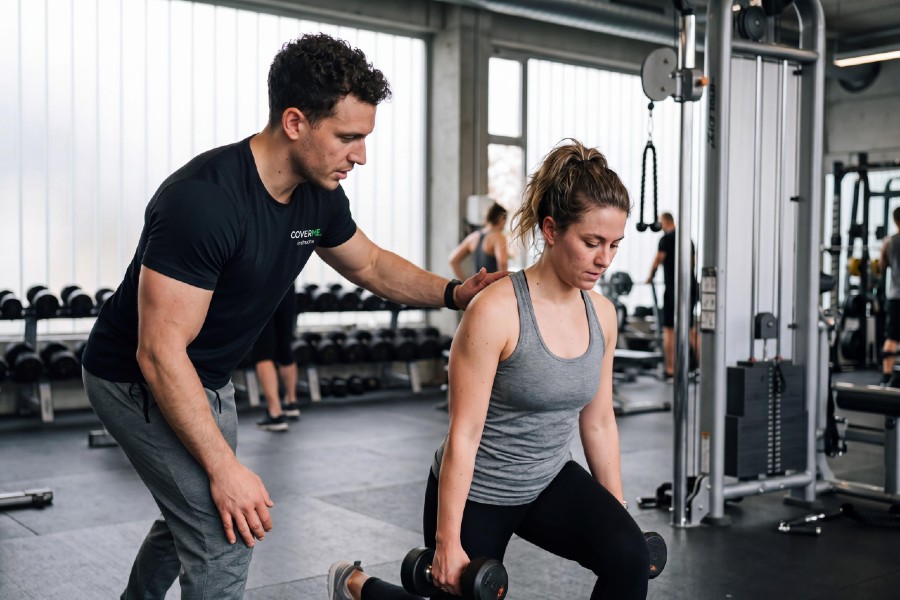
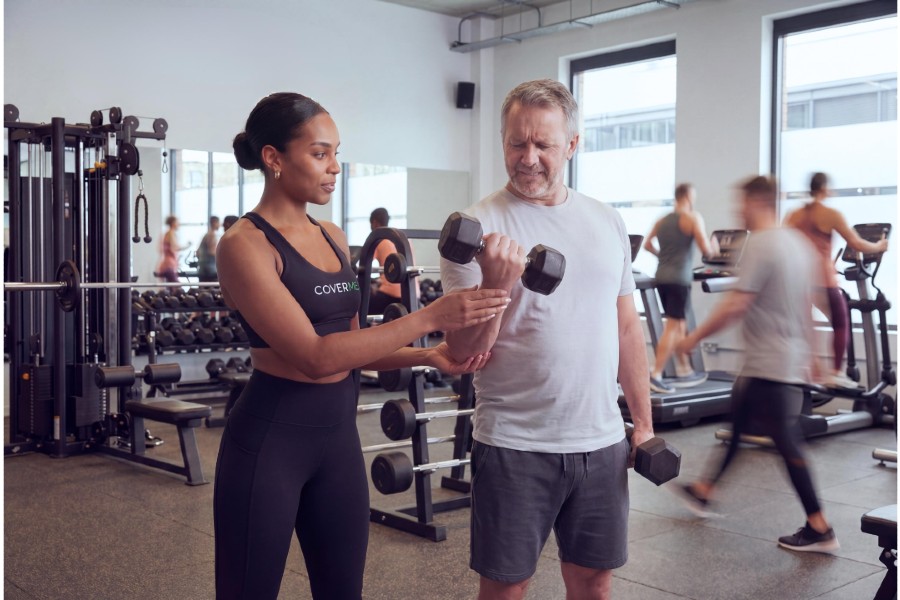
The fitness industry has a personal trainer problem. Not a talent problem. A system problem. And new AI-driven technology is exposing just how outdated the model really is.
Picture this: a newly qualified personal trainer, six months into their first gym role, technically excellent and genuinely passionate about helping people move better. But they are not busy. They are walking the gym floor trying to catch members mid-squat to talk about their goals, hanging around reception hoping someone asks about training, and watching their income slowly fail to materialise.
Within twelve months, there is an 80% chance that trainer has left the industry entirely.
That statistic, cited by CoverMe, a global fitness workforce management platform, is one of the most confronting numbers in the fitness industry. And what makes it worse is this: most of those trainers did not leave because they were bad at their jobs. They left because the business model asked them to be something they were not. Relentless, confident, gym-floor salespeople.
Why the Personal Training Sales Model Has Been Broken Since the 1980s
Walk into most gyms today and the way personal training is sold looks almost identical to how it was sold four decades ago. Trainers engage in conversation, eagerly handing out cards at reception and hoping they’ll intercept a potential client.
“The way most facilities sell PT hasn’t changed since the 1980s,” says Rosanna Tucker, co-founder and CEO of CoverMe. “Trainers walking the gym floor, touting for business at reception and hoping to catch a member at the right moment.”
The problem is structural. The model systematically rewards extroverted, high-energy personalities and penalises everyone else, regardless of coaching quality, specialist knowledge or client outcomes. A brilliant corrective exercise specialist who is not naturally loud does not thrive in this environment. Neither does an experienced trainer returning to the industry after time away, or a new graduate still building their confidence.
The result? PT turnover in some facilities runs as high as 50%. Operators are constantly recruiting, constantly onboarding, and constantly losing the experienced trainers who represent their most valuable service offering.
What Gym Members Actually Want from Personal Training
There is another side of this equation that rarely gets discussed: what members actually want from their personal training experience.
The assumption baked into the traditional model is that members need to be approached. That they will not seek out a trainer on their own and need to be interrupted to be convinced. But that assumption is increasingly out of step with how people behave in every other part of their lives.
People book restaurants, hire tradies, find babysitters and choose accountants through platforms that let them browse, compare, decide and book on their own terms, without any human pressure. The idea that gym members, many of whom already feel self-conscious in a training environment, want to be approached mid-workout by someone trying to sell them something simply does not hold up.
According to data from CoverMe’s early platform pilots, 60% of members abandon the PT booking process when it is not instant. That is not a small dropout rate. That is the majority of potential clients walking away not because they do not want training, but because the friction in the process loses them.
The same data reveals something equally striking on the retention side: members who book a PT session within their first 14 days are up to 60% more likely to stay beyond the critical 90-day mark. Given that most gym member churn happens in that first three months, the commercial implication for operators is significant.
How AI Matching Technology Is Changing Personal Trainer Retention
This is the landscape that AI-driven personal training platforms are stepping into, and the technology shift is more fundamental than it might first appear.
CoverMe has spent four years building and refining a matching engine across millions of instructor-to-club bookings for group fitness. The company has now extended that engine into personal training with the launch of CoverMe PT, an on-demand platform that matches members to personal trainers in under 10 seconds.
The matching logic goes beyond availability. The platform analyses each member’s goals, current fitness level, confidence and availability against trainer specialisms in real time, in the same way a streaming service learns your preferences and surfaces what you actually want rather than what happens to be on the shelf closest to you.
“Members don’t want to be interrupted mid-workout to be sold to,” Tucker explains. “They want to discover, choose and book PTs on their own terms, with the immediacy and energy of a social media platform.”
For personal trainers, the shift is equally significant. Instead of building a client base through cold approaches, trainers on the platform receive matched bookings, automated diary management and integrated payment processing. The business administration that eats into training time, and that many PTs are poorly equipped to handle, is managed by the platform.
The results from early pilots are notable: a 40% uplift in first-time PT bookings, a 25% boost in member engagement through early induction nudges, and a 21% revenue increase through group session conversion. PT onboarding takes under six minutes. Bookings take under ten seconds.
What This Means for Personal Trainer Retention in Australian Gyms
CoverMe PT is initially rolling out across the UK, US and Europe, but the underlying dynamics the platform is responding to are just as present in the Australian market.
For gym operators, the implications work on two levels. First, there is the member retention argument: if early PT booking is genuinely correlated with 60% better retention at the 90-day mark, then making that first booking as frictionless as possible is a core business lever, not a nice-to-have. Second, there is the personal trainer retention argument: if 80% of PTs are leaving within a year partly because they are not built to be gym-floor salespeople, then reducing that sales burden through automation could meaningfully change who stays in the industry and for how long.
For personal trainers themselves, platforms like this represent a different kind of career proposition. One where building a client base does not require a particular personality type, just quality coaching and a profile that accurately reflects your specialisms.
For Australian operators specifically, this may not be a distant prospect. CoverMe has confirmed it is already in active discussions with a major Australian club operator regarding a market-wide rollout, one that would span both CoverMe Fitness and the newly launched CoverMe PT platform as a complete workforce solution. The operator has not been named, but the scope of those conversations suggests Australia is firmly on the roadmap.
“CoverMe PT allows PTs to focus on training people, not selling,” says Tucker. “Every new member, every welcome, is matched and booked in real time. It’s on-demand, curated and frictionless, just the way Netflix, Uber and Airbnb taught a generation to expect everything else in their lives.”
The Future of Fitness Technology in Australia: Is Your Business Ready?
Fitness technology in Australia has moved quickly in some areas, including wearables, programming apps and online coaching platforms. But the operational infrastructure of physical gyms, particularly around personal training, has lagged behind.
The tools to fix the gym-floor sales model have existed in other industries for years. Matching engines, on-demand booking, automated compliance verification, real-time demand visibility. None of this is new technology. It is just new to fitness.
What platforms like CoverMe PT represent is not just a product launch. It is a broader signal that the fitness industry is finally applying the same digital infrastructure that transformed retail, hospitality and transport to one of its most commercially critical and most operationally neglected service lines.
For Australian fitness businesses watching this space, the question is not whether this kind of technology is coming. It is whether you want to be ahead of it or behind it when it arrives.
CoverMe PT is currently rolling out across the UK, US and Europe, with active discussions underway regarding an Australian rollout. Operators interested in early conversations can visit https://www.covermeapp.co.
Check out these articles:

What Aussie Gym Owners and Fitness Professionals Should Know About Technogym BioStrength
Your members are showing up wanting to do strength training. Most of them have no idea how to do it properly for their goal. They pick a machine, do three sets of ten, scroll their phone during rest, and repeat. The rep range is arbitrary, the rest period is a guess, the tempo is an

Boutique Fitness Trends in 2026 and What They Mean for Australian Studio Owners
New research from boutique fitness management platform bsport surveyed more than 550 studio members globally to find out what drives discovery, loyalty and growth. The findings have significant implications for how Australian fitness businesses operate, market and grow. Running a boutique fitness studio in Australia has never been more competitive. New studios are opening constantly,
What Australian Gym Operators Need to Know About the Peloton Commercial Series
For years, Peloton was the brand that gym owners quietly blamed for pulling members away. The gleaming bike in the spare room. The “I cancelled my membership… I’ve got Peloton now” conversation at the school gate. The pandemic-era darling that turned home fitness into a lifestyle identity. Now Peloton wants to put its equipment on

3 Fitness Products You Should Have In Your Gym in 2025
The Aussie thirst for gym facilities is as strong as ever and the greatest challenge for fitness business owners is retaining members in a highly competitive market. There are some pieces of equipment that you could expect to find in pretty much any fitness centre, such as weight plates, dumbbells and cardio machines, but what

Life Fitness Take Premium Cardio Equipment To New Heights
Innovation in the cardio equipment space is competitive and it can be hard to differentiate between brands with a similar price point. The new Symbio™ range from Life Fitness Australia, however, has really shaken up the market with an array of exciting new features. The team from What’s New in Fitness were impressed with the

MyZone Appoints Advisory Group On Wearable Technology
MyZone has taken new steps to remain recognised as one of the most ‘relevant’ wearable technologies for the fitness industry, delivering a wearable fitness tracker that shows and rewards effort when you work out. In a new move to stay at the forefront of the industry, MyZone has assembled a ‘thinktank’ of health and fitness

Best Practices For Creating Video Content in 2025
Effective video content is the heart and soul of most forms of online communication in today’s fast-paced digital age. From social media to professional platforms, videos are everywhere. And the use of videos is only gaining momentum. It doesn’t matter if you’re a small business owner, a fitness entrepreneur, or a content creator, it’s important to

Driving Growth in Australian Fitness Franchises By Leveraging Technology and KPIs
This article was provided by Jaffrey Ali, Chief Product Officer at FranConnect As Summer approaches, gyms across Australia are experiencing a surge in memberships. Health-conscious individuals, both new and returning, are flocking to fitness centres to prepare for the warmer months. This rising trend presents a golden opportunity for fitness franchises and multi-location gyms to

Is Biohacking The Next Frontier in Client Engagement?
Biohacking is so popular that there’s an entire subreddit devoted to it these days. What is it, and how can you utilise it as a fitness professional to help your clients achieve their goals? In the noisy fitness landscape, trainers are always looking for ways to stand out from the crowd, so is the rise
