Whether you’re fitting out a brand-new commercial gym, refreshing an ageing cardio floor, or expanding an existing facility, purchasing commercial cardio equipment is one of the most significant investments you’ll make as a fitness business owner. This guide walks you through everything you need to know — from understanding what separates commercial-grade machines from consumer models, to the key evaluation criteria that protect your investment for the long term.
Table of Contents
- Why Cardio Equipment Is Still a Core Investment for Commercial Gyms
- Commercial vs Consumer Fitness Equipment: Why the Difference Matters for Gym Owners
- Types of Commercial Cardio Equipment for Gyms: A Complete Overview
- What to Look for When Buying Commercial Cardio Equipment: 9 Key Considerations
- How Much Does Commercial Cardio Equipment Cost in Australia?
- New vs Refurbished Commercial Cardio Equipment: Which Is Right for Your Gym?
- How to Choose a Commercial Fitness Equipment Supplier in Australia
- Commercial Cardio Equipment FAQs for Australian Gym Owners
To learn about types of strength equipment that can help you make your gym floor the best it can be, check out the WNiF Buyer’s Guide to Commercial Strength Equipment.
Why Cardio Equipment Is Still a Core Investment for Commercial Gyms
Cardio equipment remains a cornerstone of the commercial gym floor. While functional training zones and free weight areas have grown considerably in popularity over the last decade, cardio machines continue to drive member satisfaction, new member acquisition and overall floor utilisation — particularly for members focused on endurance, weight management and general fitness.
For gym owners and fitness business operators, the cardio floor is often one of the first things prospective members evaluate during a tour. A floor equipped with well-maintained, modern cardio machines signals professionalism, builds member confidence and directly supports member retention.
Getting your equipment selection right from the start — and understanding how to maintain and manage it over time — can mean the difference between a cardio floor that earns its keep and one that becomes a constant drain on your operational budget.
Commercial vs Consumer Fitness Equipment: Why the Difference Matters for Gym Owners
This is one of the most important distinctions to understand before you spend a single dollar. Commercial and consumer fitness equipment may look similar on the surface, but they are engineered for fundamentally different use cases.
Daily Usage Ratings: How Commercial Equipment Is Built for High-Volume Gyms
Consumer equipment is designed for light, intermittent use — typically one to four people using a machine for 30–60 minutes a day. Commercial equipment is rated for continuous multi-user daily use, often 10–16 hours per day across dozens of users. The engineering behind that durability affects every component: frames, motors, decks, bearings, belts and electronics.
Frame Construction and Steel Quality in Commercial Gym Machines
Commercial machines are built with heavier gauge steel, reinforced weld points and wider, more stable bases to handle the stress of constant use and the full weight range of a commercial user base. Consumer frames are lighter and less robust by design — because they don’t need to be anything else.
Commercial Treadmill Motors and Drive Systems: What Sets Them Apart
On commercial treadmills and other motor-driven equipment, the motors are significantly larger, better cooled and built to sustain prolonged continuous operation. A consumer treadmill motor operating under commercial usage patterns will overheat and fail rapidly.
Commercial Fitness Equipment Warranties: What to Expect as an Australian Gym Operator
Commercial equipment comes with commercial warranties — typically covering the frame for the life of the product and parts and labour for multi-year terms. Consumer warranties are far shorter. More importantly, commercial suppliers provide field service and replacement parts programs designed for business operators. When a machine goes down, you need it back up quickly — that requires a commercial-grade support network.
Australian Standards for Commercial Gym Equipment: AS ISO 20957 Explained
In Australia, commercial fitness equipment sold and operated in public environments must comply with relevant Australian Standards (including AS ISO 20957 for stationary training equipment). Consumer equipment is not certified to the same standards. This has liability implications for commercial operators.

Types of Commercial Cardio Equipment for Gyms: A Complete Overview
Commercial Treadmills for Gyms: Key Specs and What to Look For
Treadmills remain the most universally used cardio machine in commercial gyms. They support the broadest range of users — from walkers to serious runners — making them one of the most flexible investments on your floor.
What to look for in commercial treadmills:
- Running deck size (longer and wider is better for taller and faster users)
- Motor size (typically 3–5 HP continuous duty for commercial models)
- Speed range and incline/decline capability
- Cushioning system (reduces user joint stress and extends deck life)
- Console and connectivity features
- Weight capacity (commercial models typically support 150–180kg+)
Treadmills are generally your highest-maintenance cardio machine due to motor wear, belt wear and deck degradation under heavy use. Factor this into your total cost of ownership calculations.
Commercial Stationary Bikes: Upright, Recumbent, Air and Indoor Cycling Compared
Stationary bikes serve a wide spectrum of training styles and user demographics. They are among the most low-maintenance options on a commercial cardio floor, making them excellent value over time.
Commercial Upright Bikes
Upright bikes mimic the position of a standard bicycle. They are a staple of any general fitness gym and are popular with both older members and casual exercisers. They tend to have a smaller footprint than recumbent or indoor cycling bikes.
Commercial Recumbent Bikes: Low-Impact Cardio for Rehabilitation and Older Members
Recumbent bikes offer a reclined, seated position with back support, reducing strain on the lower back and joints. They are particularly well-suited to:
- Older adult members
- Rehabilitation and post-injury users
- Members with chronic lower back issues
From a commercial perspective, recumbent bikes are a strong retention tool for demographics that may otherwise struggle with more demanding equipment.
Commercial Air Bikes (Assault Bikes / Fan Bikes) for HIIT and Functional Training
Air bikes — also known as assault bikes or fan bikes — use a fan-driven resistance system that increases with pedalling intensity. They provide a full-body workout (upper and lower body simultaneously) and have become extremely popular in functional training, HIIT and CrossFit-style environments.
Key characteristics of air bikes:
- No motor — mechanically simple and low maintenance
- Resistance is self-regulated (the harder you push, the harder it gets)
- Excellent for interval training protocols
- Typically louder than other bike types — worth considering in terms of floor placement
Commercial Indoor Cycling Bikes for Group Fitness Classes
Purpose-built for group cycling classes and independent ride sessions, indoor cycling bikes (sometimes referred to by brand names like spin bikes) are designed around a weighted flywheel that simulates road riding feel.
If you run group fitness classes, indoor cycling bikes are likely a separate procurement decision from your general cardio floor. Key considerations include:
- Adjustability (saddle, handlebar height and horizontal positions)
- Belt vs chain drive systems
- Flywheel weight and feel
- Whether connected/on-demand class functionality is required.
Commercial Rowing Machines for Gyms: Air, Magnetic and Water Resistance Compared
Rowing machines (ergometers) deliver a highly efficient full-body cardiovascular workout, engaging an estimated 86% of major muscle groups. They have moved from a niche cardio option to a mainstream piece of equipment, partly driven by the growth of functional fitness and boutique rowing studios.
Types of resistance in commercial rowers:
- Air resistance: Most commonly used in performance environments. Resistance increases with stroke intensity (similar to air bikes). The gold standard for competitive and performance rowing. Note: these are louder than other resistance types.
- Magnetic resistance: Quieter and smoother than air. Resistance is set electronically or manually. Common in connected/smart rower formats.
- Water resistance: Uses a water-filled flywheel to simulate on-water rowing feel. Popular in boutique and premium gym settings. Quieter than air with a distinctive aesthetic.
- Hydraulic resistance: Less common in commercial settings. Lower price point but less durable and less realistic feel.
Rowing machines are relatively low maintenance but require regular seat and rail cleaning, monorail inspection and handle/chain/strap checks.
Commercial Elliptical Trainers: Low-Impact Cardio for Inclusive Gym Floors
Elliptical trainers provide a smooth, elliptical stride motion that mimics running without the impact forces of a treadmill. They are one of the most accessible and inclusive pieces of cardio equipment you can offer.
Why ellipticals belong on a commercial floor:
- Suitable for all fitness levels, including beginners
- Popular with members managing joint conditions, post-injury recovery, or older age
- Lower perceived exertion at equivalent cardiovascular output compared to treadmills
- Typically lower maintenance than treadmills
What to look for in commercial ellipticals:
- Stride length (adjustable stride is a significant value-add for mixed user bases)
- Flywheel weight (heavier = smoother feel)
- Resistance levels and incline options
- Forward/reverse motion capability
- Console and connectivity features
- Step-through access for users with mobility limitations.

Other Commercial Cardio Machines Worth Adding to Your Gym Floor
The commercial cardio category has expanded significantly in recent years. Depending on your gym’s profile, you may also consider:
Stair Climbers / Stepmill Machines — A highly effective lower-body cardio option. Popular in performance gyms and increasingly in mainstream commercial facilities. Compact footprint relative to calorie burn efficiency.
Jacob’s Ladder / Climber Machines — Self-powered, angled ladder climbing machines. Excellent for conditioning-focused environments and differentiation from standard cardio offerings.
Ski Ergs — Typically associated with functional training environments. Upper-body dominant cardio that complements rowing.
Seated Ellipticals (Cross Trainers) — Provide upper and lower body movement in a seated position. Valuable for members with limited mobility or in aged care or rehabilitation-adjacent environments.
What to Look for When Buying Commercial Cardio Equipment: Key Considerations
1. How to Calculate How Many Cardio Machines Your Gym Actually Needs
Before selecting any machine, accurately forecast usage volume. This means understanding:
- Your projected member base — How many members are you planning for at launch? At capacity?
- Peak hour foot traffic — When are your busiest windows? Equipment that sits idle 90% of the time and is overwhelmed during a 6am peak is a floor management failure.
- Queuing tolerance — A general guideline often used in gym planning is one cardio unit per 50–80 active members, though this varies significantly by gym format, class schedule and member demographics.
Under-specifying the number of machines creates a poor member experience. Over-specifying means capital tied up in underutilised assets. Usage volume planning is the foundation of smart equipment procurement.
2. How to Assess Durability and Build Quality in Commercial Gym Equipment
Not all machines marketed as “commercial grade” are equal. When evaluating durability:
- Ask for the usage rating — Reputable commercial equipment suppliers can tell you exactly how many user-hours per day a machine is rated for. This is the single most important durability specification.
- Examine the frame — Look at weld quality, steel gauge and base footprint. A wider, heavier frame indicates greater stability and structural longevity.
- Review the warranty terms carefully — Frame lifetime warranties are common on quality commercial equipment. Look at parts and labour terms specifically. A machine with a five-year parts warranty but a 90-day labour warranty is not well supported.
- Ask about real-world longevity — Ask suppliers for references from comparable commercial operations using the same equipment. Ask specifically how long those machines have been in service.
3. Commercial Cardio Equipment Maintenance Costs and Serviceability
Maintenance is where many gym operators underestimate total cost of ownership. A machine that costs more upfront but requires less maintenance and is easier to service will frequently prove to be the better investment.
Key questions to ask before purchasing:
- What are the recommended maintenance intervals? (Daily, weekly, monthly, annual checks)
- Are spare parts available locally in Australia? Long lead times on spare parts from overseas mean extended machine downtime.
- Does the supplier have local technicians? Ideally, service technicians should be able to reach your facility within a reasonable timeframe.
- How complex are common repairs? Some machines are designed with serviceability in mind — modular components, accessible panels, clear service documentation. Others are difficult and expensive to maintain.
- What is the expected lifespan of key consumable parts? For treadmills this means deck lifespan and belt replacement intervals specifically.
Build a relationship with your supplier’s service team before you buy. How responsive they are at the sales stage often predicts how responsive they’ll be when a machine goes down.

4. Connected Fitness Features: What to Look for in Modern Commercial Cardio Equipment
The commercial fitness equipment sector has undergone a significant technology transformation. Connectivity features now influence member satisfaction, operational efficiency and competitive positioning.
Console and display quality — Modern commercial consoles should be intuitive, easy to clean and clearly visible in varying light conditions. Touchscreen consoles are standard at the premium end of the market.
Wireless heart rate compatibility — Most quality commercial machines support Bluetooth and ANT+ heart rate chest straps and wristbands. For members who track training data, this is increasingly expected.
Entertainment connectivity — Many commercial treadmills and bikes now support personal device connectivity via Bluetooth and/or a tablet/phone holder, allowing members to access their own content. Some models integrate screens with Netflix, YouTube and music apps built in.
Connected fitness platforms — A growing number of commercial cardio machines integrate with platforms like iFIT, Kinomap or brand-specific ecosystems. These offer on-demand and live classes, virtual routes and guided workouts directly on the machine. The commercial value of this varies: some gym formats benefit significantly, others don’t — evaluate based on your member profile.
Fitness tracking and API integration — Some commercial equipment can integrate with gym management software and member-facing apps, providing workout data directly to member profiles. If this is important for your business model, verify compatibility with your specific gym management system before purchasing.
Usage and diagnostic data — Higher-end commercial equipment provides operators with machine usage data, error logs and predictive maintenance alerts. This operational data can significantly reduce downtime and inform future purchasing decisions.
5. Commercial Gym Floor Space Planning for Cardio Equipment
Cardio equipment has specific space requirements that extend beyond the machine’s physical footprint. Before purchasing, conduct a proper floor plan assessment.
Key space planning principles:
- Safety clearances — Treadmills require a minimum clear zone behind the belt for user safety. Refer to your supplier’s recommended clearances and any applicable Australian Standards.
- Access clearances — Members need adequate space to mount and dismount machines safely. This is especially important for rowers, steppers and recumbent bikes.
- Ventilation and airflow — Dense cardio zones generate significant heat and humidity. Your floor plan should account for airflow patterns to keep machines and the environment comfortable.
- Power access — Motorised equipment requires power outlets. Early planning with an electrician prevents costly retrofits.
- Maintenance access — Technicians need to access machine internals. Ensure there is enough clearance around machines for service work.
- Traffic flow — Avoid layouts that create bottlenecks around high-traffic machines like treadmills during peak hours.
If you’re fitting out a new space, work with a specialist gym floor planner before finalising your equipment list. Equipment quantities and models can shift significantly once spatial constraints are mapped.
6. Weight Capacity Requirements for Commercial Cardio Machines in Australia
Commercial gym members span a wide range of body weights. Selecting equipment with appropriate weight capacities is important for:
- User safety — Operating equipment above its rated capacity is a safety risk and a liability issue.
- Inclusivity — Members who find that equipment cannot accommodate their body weight will not stay members.
- Durability — Repeated use at or near maximum capacity accelerates wear on frames, motors and moving parts.
Quality commercial cardio machines typically carry weight ratings of 150–180kg or higher. Verify the rated capacity for every machine you consider and ensure it aligns with your member demographic.

7. Accessible Gym Equipment: Compliance and Inclusivity for Australian Facilities
A commercial gym serves a diverse membership base. Accessibility considerations should be integrated into your equipment selection — not added as an afterthought.
Evaluate:
- Step-over height — Lower step-over heights on treadmills and bikes improve access for members with limited mobility.
- Handrail and support design — Particularly relevant for elderly members and those with balance concerns.
- Adjustability range — Bikes and rowers with broad adjustment ranges accommodate members across a wider spectrum of body sizes.
- Recumbent options — Ensuring your cardio floor includes recumbent bikes broadens your accessible offering significantly.
- Placement — Ensure accessible equipment is not relegated to difficult-to-reach corners of the floor.
In Australia, the Disability Discrimination Act 1992 has implications for commercial fitness facilities. If you’re fitting out a new space or undertaking a major refurbishment, consult with an access consultant as part of your planning process.
8. Noise and Vibration from Commercial Cardio Equipment: What Gym Owners Need to Know
In multi-use facilities — and particularly in facilities with residential neighbours — noise and vibration from cardio equipment can be a significant operational concern.
Noise considerations by machine type:
- Air bikes and air rowers are notably louder than their magnetic or water-resistance counterparts — factor this into floor placement
- Treadmills generate significant impact noise, particularly if placed on upper floors — vibration-isolating flooring can mitigate this
- Magnetic resistance bikes and ellipticals are among the quietest cardio options available
If you’re operating in a multi-tenancy building or an environment with noise sensitivity, discuss noise ratings and mitigation strategies with your supplier before purchasing.
9. Gym Equipment Aesthetics and Visual Consistency on Your Cardio Floor
While performance and durability must come first, the visual presentation of your cardio floor matters for member perception and marketing.
Consider:
- Colour and finish consistency — A floor with machines from multiple brands and eras can look disjointed. If you’re doing a full fit-out, cohesive equipment aesthetics reinforce your brand.
- Console design — Dated consoles signal dated equipment, even if the machine beneath is mechanically sound.
- Branding opportunities — Some commercial suppliers offer custom console branding and machine upholstery options.
This is a secondary consideration — never prioritise aesthetics over quality and serviceability. But within a shortlist of machines that meet your core criteria, aesthetics can be a useful tiebreaker.
How Much Does Commercial Cardio Equipment Cost in Australia?
Commercial Cardio Equipment Price Guide: Australia 2026
Commercial cardio equipment pricing in Australia varies significantly by category, brand and specification. As a general guide:
| Equipment Type | Entry-Level Commercial | Mid-Range Commercial | Premium Commercial |
|---|---|---|---|
| Treadmill | $3,500 – $6,000 | $6,000 – $10,000 | $10,000 – $15,000+ |
| Upright Bike | $1,800 – $3,500 | $3,500 – $6,000 | $6,000 – $9,000+ |
| Recumbent Bike | $2,000 – $4,000 | $4,000 – $6,500 | $6,500 – $10,000+ |
| Air Bike | $1,200 – $2,500 | $2,500 – $4,000 | $4,000 – $6,000+ |
| Indoor Cycling Bike | $1,500 – $3,000 | $3,000 – $5,500 | $5,500 – $9,000+ |
| Rowing Machine | $1,200 – $3,000 | $3,000 – $5,500 | $5,500 – $10,000+ |
| Elliptical Trainer | $3,000 – $6,000 | $6,000 – $10,000 | $10,000 – $15,000+ |
Prices are indicative only and subject to change. Contact suppliers for current quotes. Delivery, installation and GST should be factored into your budget.
Total Cost of Ownership for Commercial Cardio Equipment
The purchase price is only part of the financial picture. A complete total cost of ownership (TCO) analysis should include:
- Delivery and installation — Commercial equipment is heavy and often requires professional installation. Get this cost upfront.
- Routine maintenance — Factor in scheduled servicing costs, whether done by your own staff or by contracted technicians.
- Consumable parts — Treadmill belts and decks, bike seat pads, pedal straps and cables all have service lives. Budget for regular replacement.
- Unexpected repairs — Even quality commercial equipment will require unscheduled repairs over time. A contingency budget of 5–10% of equipment value per year is a reasonable starting point.
- Extended warranties and service agreements — These add cost upfront but provide budget certainty. Evaluate whether the terms are genuinely favourable to you as an operator.
- Energy costs — Motorised cardio equipment is a meaningful contributor to gym electricity consumption. If energy efficiency is a priority, compare power ratings across machines.
- Depreciation — Commercial equipment depreciates. Understanding depreciation curves helps with budgeting for future replacement cycles and managing your asset register.
Financing Commercial Gym Equipment in Australia: Your Options
Most major commercial fitness equipment suppliers in Australia offer financing options including outright purchase, chattel mortgage, equipment lease and rental arrangements. Each has different tax and cash flow implications. Consult your accountant or financial adviser to determine which structure best suits your business.
New vs Refurbished Commercial Cardio Equipment: Which Is Right for Your Gym?
The refurbished commercial cardio equipment market is active in Australia, and it can offer genuine value — but it comes with considerations that new equipment does not.
Why Some Gym Owners Choose Refurbished Commercial Cardio Equipment
- Lower upfront acquisition cost (typically 30–60% less than new)
- Access to premium commercial brands at reduced price points
- Suitable for lower-volume environments (small PT studios, corporate gyms)
Risks of Buying Refurbished Gym Equipment (and How to Manage Them)
- Unknown usage history — Without detailed service records, you don’t know how the machine was used or how well it was maintained
- Limited warranty — Most refurbished equipment carries significantly reduced warranty coverage compared to new
- Parts availability — Older models may have limited parts availability, especially for machines originally manufactured outside Australia
- Technology gap — Refurbished machines may lack connectivity features that members now expect
- Compliance — Verify that refurbished equipment still meets current Australian Standards
If you are considering refurbished equipment, purchase only from reputable dealers who provide documented service histories, demonstrate parts availability and offer at least a limited warranty. Avoid private sales of commercial equipment unless you have the technical expertise to evaluate the machine thoroughly.

How to Choose a Commercial Fitness Equipment Supplier in Australia
The Australian commercial fitness equipment market is served by a mix of global brands with local distribution operations and specialist Australian distributors. When evaluating suppliers, consider:
What to Look for in a Commercial Gym Equipment Supplier's Local Service Network
A supplier’s local infrastructure matters as much as the equipment they sell. Assess:
- National coverage — Do they have service technicians in your state and city?
- Parts inventory — Are common spare parts held locally, or are they imported on demand?
- Response time commitments — What are their contractual service response time obligations?
- Training support — Do they provide staff training on machine operation and basic maintenance?
Why Supplier After-Sales Support Matters as Much as Equipment Quality
Commercial equipment purchases are ongoing relationships, not one-time transactions. Evaluate the quality of a supplier’s communication and responsiveness during the sales process — it is a strong indicator of post-sale support quality.
Negotiating Volume Pricing and Full Gym Fit-Out Packages
For full facility fit-outs or large equipment orders, most suppliers will negotiate on price. Ask about:
- Volume discount structures
- Bundled delivery and installation pricing
- Trade-in or removal of old equipment
- Staged delivery arrangements to suit fit-out timelines
How to Trial Commercial Cardio Equipment Before You Commit
Reputable commercial suppliers will arrange demonstration opportunities — either at a showroom or through a trial period in your facility. Take advantage of these wherever possible, particularly for your highest-investment purchases like treadmills.
Commercial Cardio Equipment FAQs for Australian Gym Owners
How many cardio machines do I need for my gym?
A commonly cited planning benchmark is one cardio unit per 50–80 active members, but this varies significantly by gym format, class scheduling, operating hours and member behaviour patterns. A PT studio has very different requirements to a 24/7 large-format gym. Usage analytics from comparable facilities, combined with a professional gym planning consultation, will give you a more reliable figure than any general rule.
What is the typical lifespan of commercial cardio equipment?
With proper maintenance, quality commercial cardio equipment is designed to last 7–15 years depending on category and usage intensity. Treadmills under very high volume usage may require deck and belt replacement within 3–5 years, while the machine frame and electronics may last much longer. Simpler mechanical devices like air bikes and air rowers tend to have longer mechanical lifespans with less maintenance required.
How often does commercial cardio equipment need servicing?
This varies by machine type and manufacturer recommendations. As a general guide, treadmills require the most frequent attention — monthly belt tension and lubrication checks, and annual professional servicing as a minimum under heavy commercial use. Bikes and rowers have longer service intervals but still require regular inspection of wear components. Always follow the manufacturer’s recommended service schedule.
Is it worth paying for a service agreement?
For high-volume commercial operations, a service agreement provides budget certainty and guarantees response times. Whether it represents good value depends on the specific terms, the reliability of the equipment and the internal maintenance capability of your team. Get the full terms in writing before committing, and compare the cost against your own estimate of likely service costs without an agreement.
Can I mix equipment brands on my cardio floor?
Yes, and many gym operators do. There are practical reasons to maintain a degree of brand consistency (streamlined servicing, parts inventory, console uniformity) but mixing brands is not inherently problematic. If you do mix brands, ensure each supplier’s service network is strong in your area independently.
What flooring is required under commercial cardio equipment?
Commercial cardio equipment should be placed on high-density rubber gym flooring. Flooring serves multiple purposes: protecting the subfloor, absorbing vibration, reducing noise (particularly important for treadmills on upper floors), extending equipment life by reducing shock transmission to machine components, and providing non-slip safety for users. Consult with a gym flooring specialist for thickness and specification recommendations relevant to your specific machines and subfloor conditions.
What are the key Australian compliance requirements for commercial gym equipment?
Commercial fitness equipment in Australia must comply with relevant Australian Standards, primarily AS ISO 20957 (Stationary training equipment), which covers safety requirements for commercial gym machines. Equipment sold through reputable commercial suppliers should be supplied with relevant compliance documentation. As a facility operator, you also have obligations under workplace health and safety legislation to ensure equipment is maintained in a safe condition and used appropriately. Consult your state’s WHS regulator for specific obligations relevant to your business structure.

Selecting commercial cardio equipment is about much more than picking machines you like the look of. The best outcomes come from a structured evaluation process that balances member experience, operational durability, total cost of ownership and long-term serviceability.
The key principles to carry into your buying process:
- Match equipment to your actual member base and usage patterns — not to what looks good in a brochure
- Evaluate total cost of ownership, not just purchase price
- Prioritise supplier service capability as highly as equipment quality
- Plan your floor space before you finalise your equipment list
- Don’t neglect accessibility and inclusivity in your selection criteria
- Get everything in writing — warranty terms, service response commitments, parts availability
Commercial cardio equipment is a long-term capital investment. The time you invest in research, supplier evaluation and planning before you sign a purchase order will pay dividends in equipment longevity, member satisfaction and operational efficiency for years to come.
To learn about types of strength equipment that can help you make your gym floor the best it can be, check out the WNiF Buyer’s Guide to Commercial Strength Equipment.
Check out these articles:
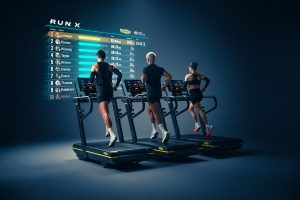
Could Your Facility Become an Official RUN X™ Centre? Inside the First Treadmill World Championship
A landmark partnership between Technogym and World Athletics is turning connected treadmills into a global competitive stage, and Australian fitness centres have a front-row seat. Running is already Australia’s most accessible sport. Parkrun draws tens of thousands of participants every Saturday morning. City2Surf sells out in minutes. Fun runs fill up months in advance. Australians
What Australian Gym Operators Need to Know About the Peloton Commercial Series
For years, Peloton was the brand that gym owners quietly blamed for pulling members away. The gleaming bike in the spare room. The “I cancelled my membership… I’ve got Peloton now” conversation at the school gate. The pandemic-era darling that turned home fitness into a lifestyle identity. Now Peloton wants to put its equipment on

2026 Buyers Guide: Commercial Functional Fitness Equipment in Australia
This guide has been created as a practical resource for gym owners, personal trainers, strength and conditioning coaches, studio managers, and anyone sourcing functional fitness equipment for commercial or semi-commercial use in Australia. Functional fitness training has moved from a niche offering to a mainstream expectation. Whether you’re opening a new facility, upgrading an existing

Wattbike Air-Pro: Obsessed With Performance on the Gym Floor
If your members love performance training, generic spin bikes probably aren’t cutting it anymore. They want real numbers, real road feel and real results… and your coaches want tools they can trust for testing, rehab and high-intensity work. That’s exactly the gap the Wattbike Air-Pro is designed to own: a commercial-grade indoor bike built for tough

Take Advantage Of 2025 EOFY Sale On Commercial Gym & Fitness Equipment
With June 30 fast approaching, fitness business owners across Australia are preparing to wrap up the financial year, which means it’s the perfect time to upgrade your gym setup. There are numerous reputable suppliers with a sale on commercial gym and fitness equipment. Smart investments now could be fully tax-deductible, giving your business a financial

Hot Deals: Affordable Commercial Cardio With Premium Features
If you thought affordable commercial cardio with premium features wasn’t possible, think again! Leading commercial fitness equipment supplier, Life Fitness Australia has some red hot deals on offer. Quality commercial cardio equipment deals As the end of the financial year approaches, it’s time to ask your accountant about making some purchases for your fitness business.

Life Fitness Take Premium Cardio Equipment To New Heights
Innovation in the cardio equipment space is competitive and it can be hard to differentiate between brands with a similar price point. The new Symbio™ range from Life Fitness Australia, however, has really shaken up the market with an array of exciting new features. The team from What’s New in Fitness were impressed with the

Finding The Right Commercial Spin Bike In 2025
Is your head in a spin about which bikes to choose for your club or studio? There are a lot of options when it comes to choosing an indoor cycling bike. Do you want high performance, a great price, or something that will impress potential new members? Whether you’re buying, replacing, or upgrading, we’ve done

Accessible Exercise With The NuStep Recumbent Cross Trainer
People with limited mobility are often overlooked by the fitness industry as a whole, yet this portion of society are often the ones with the greatest need to be able to optimise their health and fitness in order to maximise their independence and combat physical impairment. Seniors, in particular have so much to gain by