
This article was updated April 2024.
Original article written by Steve Jensen for the What’s New in Fitness Magazine – Spring 2018 Edition.
Many people say, and I must agree, that it’s important to take a few moments every now and then to reflect and that it’s a good thing to do.
We are all so busy these days where days, weeks, months and years disappear – it feels just like yesterday when I made the decision to begin my journey into the virtually non-existent world of health and fitness. However, it’s been over 40 years and lots has changed BUT some things remain the same. Looking back at what the fitness industry was in the late 70’s and 80’s, to what it is now is quite mind-boggling.
What are the lessons from the past to pay attention to?
Walking The Talk: Be A Source of Information
In the earlier days of the fitness industry, most of the fitness business owners were people who trained regularly themselves and had a depth of knowledge in what a prospect needed to do to achieve their goals. A young man seeking a bigger physique sought out the gym where the bodybuilders trained, and the female who wanted to tone up and find connection was drawn to the group aerobics class.
In an age now, where health and fitness interests sweep across functional fitness, community, recovery and music, it’s important that the businesses themselves reflect the end result that their clients are working towards. This doesn’t have to mean their physical shape, but also mindset and attitude.
Seeing the Gym as an Integral Part of Community and Identity
If we acknowledge that most of us have three ‘places’ that make up our day-to-day, it’s generally – 1st Place Home, 2nd Place Work, and a 3rd Place. This could be the beach, a local club or bar, or the gym. The global pandemic forced health club closures, and brought about a surge in the uptake of home exercise equipment and virtual fitness. The advancements in quality of home exercise set ups in recent years has made it easier than ever to have a functional fitness space in the home as well.
However, it seems that as anxiety over socialising has eased, people are returning to the gym once more and finding solace in that 3rd Place.
Group Exercise Still Going Strong
Training in groups such as the good old circuit classes are making a resurgence as we’ve accepted our human tendency to be tribal in nature. Les Mills have been saying this for years, ad the fitness industry in certainly taking notice. Many studios and clubs have returned to this style of training, and there are a seemingly never ending stream of franchises opening their doors each week with a group training offering to appeal to fitness aficionados. From gamified data such as BFT, competitive communities such as CrossFit, or even altitude training at Air Locker, group exercise is as hot as it’s ever been.
Customer Service and a Sense of Community
Keeping in line with the group feels mentioned earlier, members are valuing a sense of belonging more than ever. Reception teams taking the time to engage with members, as well as more presence on the gym floor creates more value and assists with retention.
Let’s not forget the impact of social media. A trainer who has paid attention to their members Instagram handle and tags them during a reel of their PB acts as both promotion for the gym itself, as well as giving a public shoutout to that member.
Sales and Marketing with AI and Technology
Sales were easier to come by in years gone by, and with less fitness facilities and options available, the competition was less fierce. The power of a strong sales and marketing team is widely accepted, but some are still reluctant to embrace the gym management software capabilities that can create a sophisticated sales funnel from initial enquiry through to sign up. It’s a new world out there with social media channels, SEO and email marketing, but fitness business owners need to either ride the wave, or risk being left behind.
Qualifications Matter
Qualifications to work in the fitness industry were non-existent in the 80s and the introduction of minimum requirements of fitness qualifications has made the industry much more professional and also safer. The incorporation of CECs has been a gamechanger for keeping fitness professionals staying tuned in with relevant knowledge and continually expanding their horizons, which benefits all of us.
A key takeaway is to know when to further one’s knowledge and skills, or when to outsource that skillset. Sales and communication training is one such area, where it’s worth investing in industry experts that can provide quality advice and services to positively affect lead generation and sales conversion.
The thing that must be remember is that ongoing development and implementation is essential to make sure the skills and strategies are used as soon as possible to passivity effect the bottom line. Any team member training MUST be ongoing to be successful. The companies that train and coach their teams regularly have higher team retention and the companies make more sales and everyone feels happy.
Australia’s fitness industry will grow substantially in the next 5 years with many more specialised services being created and the consumers and the fitness industry professionals will all benefit from it. All is looking positive, let’s make a difference.
Some more articles you may enjoy:

Business Spotlight: Laith Cunneen on growing Peak Physio to six clinics and building a clinical platform for fitness professionals
When Laith Cunneen opened Peak Physio in 2012, it was a single clinic. Fourteen years on, the business has six locations across NSW, has treated more than 50,000 clients and has grown revenue by more than 30 per cent in recent years. Along the way it has built an Instagram following of 72,000, a figure
How a young franchisee grew his Plus Fitness franchise memberships by 40% in 15 months
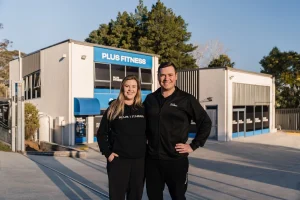
When Joshua Thomas took over Plus Fitness Katoomba in 2025, aged 25, the Blue Mountains club had been trading since 2013 and was due for investment. Fifteen months later, memberships are up 40% and monthly visits have risen 75%, from around 4,000 to 7,000. The turnaround came from a rapid refit, a policy of putting
J.I.M Infrared Fitness Review: What 21 Days at Joy In Movement Taught Me
Why I Wanted to Try J.I.M Infrared Fitness When Joy in Movement (J.I.M) offered me a complimentary trial, I jumped at it. I’ve trained in gyms for more than 25 years and I’ll never say no to a sauna, so a workout that combines movement with infrared heat sounded right up my alley. I’ll admit

No Mirrors, Dogs Welcome: How Project Better Built a Gym Members Won’t Leave
When COVID lockdowns forced gyms to close, more than 100 Project Better members kept paying anyway. Co-founder Jess Curl explains how a community-first model took the brand from a garage to a fifth Melbourne site, and what other gym owners can learn from it. Almost 10 years ago, Jess Curl set out to build a

How to Write A Media Release That Grabs Attention
Knowing how to write a media release is one of the most cost-effective marketing skills a fitness business owner can learn. A single story in your local paper, a trade publication or a national outlet can bring in more members than months of paid ads. The challenge is getting noticed. Journalists receive hundreds of pitches

Inside inLIFE Wellness First Franchise Round: What It Reveals About Scaling a Fitness Business
inLIFE Wellness opened franchise applications to the public for the first time since launching in 2019, a milestone for a boutique wellness network that has grown to 60 studios across Australia and the United States without any franchise marketing. Founder Scott Capelin, who has spent 25 years building and operating fitness businesses, built the model
