

Gym member retention is a top priority for every operator, and community is one of the most powerful ways to boost it. Yet on most gym floors, members train side by side for years without saying a word. A new Melbourne-built social gym app, GymSpark, wants to change that, and to give gym owners another reason members stay.
Anyone who has trained in a commercial gym lately knows the scene. Every second member has headphones in. Asking whether someone is using a bench means a tap on the shoulder. The faces you see at 6am every weekday stay strangers.
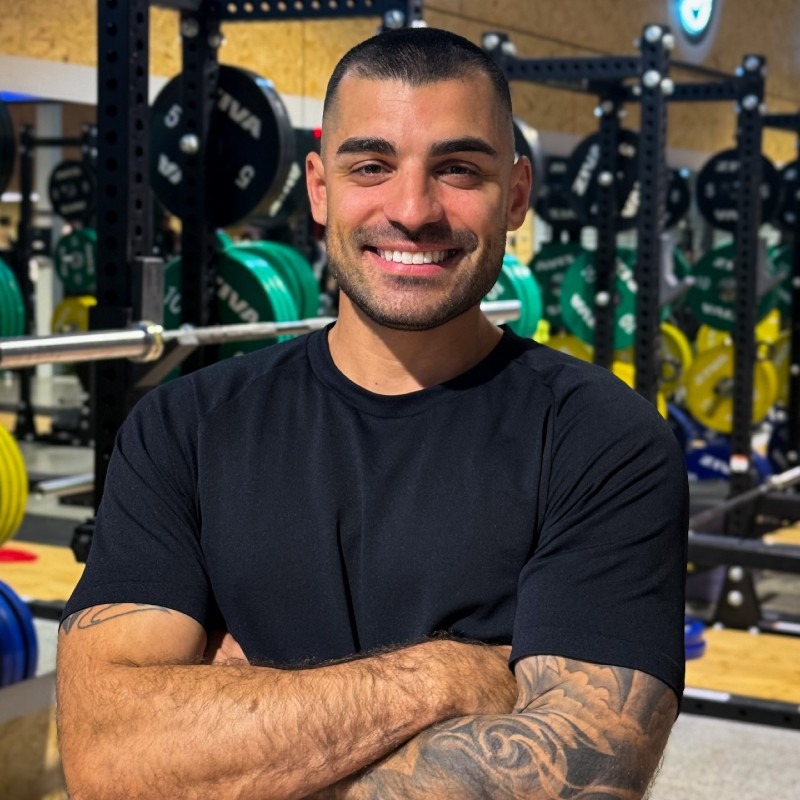
Jordan Tilli, the founder of GymSpark, started off by building the app himself over roughly six months. “A lot of people have that resting gym face, where they don’t really look approachable,” he says. “But they actually are up for a chat.”
Key takeaways for gym owners
- Members who feel part of a gym community have more reasons to stay, which makes community a practical gym member retention strategy, not a nice-to-have.
- GymSpark is a free social gym app that only works when members are physically at the gym, with no direct messaging.
- Partner gyms can use check-in data to spot members at risk of churn and follow up before they cancel.
- Personal trainers can list a free profile and be found by members checking in at their gym.
- The simplest boost costs nothing: get staff talking to members on the gym floor.
Why gym community matters for member retention
Ask any operator what drives long-term success, and reducing gym membership churn will be near the top of the list. Signing a new member costs far more than keeping an existing one, and competition for members is fierce.
Members rarely cancel because of one bad workout. They drift away when the gym stops feeling like part of their week. A member who knows a few faces, staff included, has a social reason to turn up even when their training motivation dips.
“People aren’t cancelling their membership because they’re not getting anything out of the gym, fitness-wise, but also social-wise,” Tilli says. “They have a reason to stay.”
Why don't people talk at the gym?
Tilli puts the silence down to a standoff. “Everyone thinks the other person doesn’t want to talk, but they do. And then no one bothers.”
He believes the pandemic still plays a part. “There’s a whole bunch of people that stopped socialising as much as they used to, and never really got it back,” he says. “We’re probably still feeling the effects of it.”
The irony is that gym regulars already have plenty in common. “You probably have a similar schedule to these people, because you see them at the gym at the same time. And there’s a common interest right off the bat.”
Meet GymSpark: a social gym app built by a shy gym-goer
Tilli isn’t a fitness industry insider. His background is in sales, including a business development role at a tech startup, and he now works in shopfitting. What he does have is years of training and, by his own admission, a naturally shy streak.
The idea began with a running joke on social media: the gym crush you never speak to, but a business built on people chasing their crushes wasn’t much of a business. So the concept broadened into the social side of the gym: finding a gym buddy or training partner, asking for a spot, or simply making a friend.
“I’ve never asked a random person to spot me on the bench press,” he admits. “So even if it’s just used that way, it’s a way to make people a bit more comfortable being at the gym.”
How does GymSpark work?
GymSpark is designed to be used at the gym, not scrolled on the couch.
- Check-in only. Members must be within about 100 metres of their gym to check in. Only then is their profile visible, for a 90-minute session window.
- Opt in, or don’t. Not in the mood to chat? Skip the check-in, or check in privately so the session still counts towards your goals.
- No DMs. Members can “Spark” each other to signal they’re open to a chat, but there’s no messaging. The hello happens in person.
- Privacy by default. Women’s profiles are hidden from men unless they choose to go public.
- Community features. A workout feed, goal setting, leaderboards and challenge badges.
The no-messaging rule is deliberate. “I didn’t want it to be like any other social or dating app,” Tilli says. “My tunnel focus was that real-world interaction, and having messaging would take that away. I wanted it all to happen on the gym floor.”
He doesn’t want members living in the app either. “It’s just a gateway to having that chat.”
Is GymSpark a dating app?
It’s the first question most people ask, and Tilli doesn’t dodge it. “It’s a social app that can be used to date,” he says. “But it’s not a dating app.”
Gym cultures differ, and members will use it however they choose. But the design leans hard against unwanted attention. With no DMs and women’s profiles private by default, someone can’t simply learn a member’s name and track her down on the app.
How GymSpark supports gym member retention
For operators, the pitch is clear. “Avoiding membership churn is probably our key focus,” Tilli says.
GymSpark is currently free for gyms, with partnerships at a few levels:
- Flyers and QR-code cards at reception, flagging the club as a GymSpark partner.
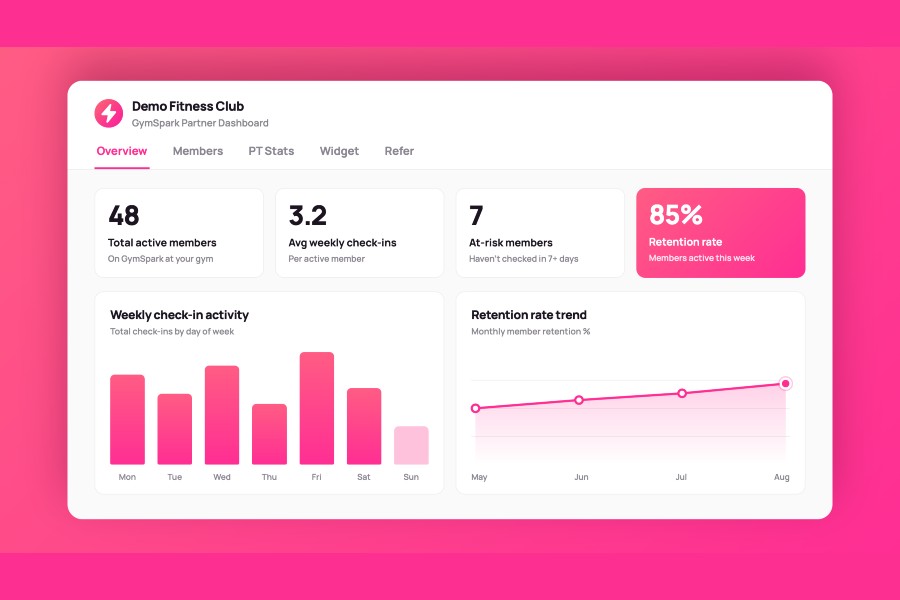
- Owner dashboard. Check-in data shows which members attend consistently and which have dropped off. The dashboard can flag members at risk of churn, and highlight members who have set goals but aren’t hitting them, so staff can reach out.
Tilli acknowledges that big franchises already have member tracking software. The dashboard is aimed at independent gyms that “don’t have the time to build something like that for themselves, or pay thousands to have it from someone else”.
His ideal is GymSpark becoming part of member onboarding. A new member signs up and staff mention the app, “so you’re not always on your own when you get there”. For beginners who can’t yet afford a personal trainer, it’s also a way to pick up tips from people who train at the same time.
Longer term, he wants check-ins limited to partner gyms, with a public partner page that acts as “kind of like a social badge” for clubs that take gym community and safety seriously.
How personal trainers can use GymSpark to find clients
Personal trainers can create a free profile listing their qualifications, specialisations and rates, linked to the gym they work from. They don’t need to check in. When a member checks in at that gym, a “find a PT” button shows every trainer there.
Unlike member profiles, PT profiles can be messaged. Trainers can also sync their calendar so members can see availability and book through the app.
Tilli sees it as an upgrade on the trainer photo board at reception. “Are people really looking at that that much? Probably not.” For PTs, it means being visible to motivated members at the moment they’re training, without making the cold approach themselves.
Safety and moderation on a social gym app
Every profile and feed post has a report button, which stays available after members match. For now, reports go directly to GymSpark, who can remove content immediately and notify the gym involved. As more gyms partner up, he wants owners and managers to have oversight of their own members on the app.
Building a gym community one club at a time
GymSpark is very much in its “launch” phase, and Tilli is upfront about the growth stage every marketplace startup goes through. “I can post to TikTok, and if 100 people sign up but they go to 100 different gyms, it feels empty anyway,” he says. “It’s never going to be harder than it is now.”
His answer is to grow gym by gym. Two Anytime Fitness clubs in Melbourne, Essendon and South Yarra, are promoting the app, and franchise clubs are his focus because it’s easier to reach the decision-maker.
One early surprise: most active users are over 30. “As you get older you kind of lose more friends. That’s how life goes,” he says.
One thing any gym can do tomorrow to improve member retention
Asked how gyms can build community today, app or no app, Tilli doesn’t mention technology at all. He points to the staff.
“My own experience and feedback I’ve received is that we don’t really see the people working at the gym interacting with members on the gym floor,” he says. He’d like to see more than “the hello at the front desk”: staff chatting to members while they re-rack weights or wipe down equipment.
“If they’re the ones starting it and getting people talking, it encourages other people to talk to each other as well.”
It’s a low-cost way to build a more loyal membership. When staff model the behaviour, members follow, and a more social gym floor is one of the simplest gym member retention wins available.
Frequently asked questions
What is GymSpark?
GymSpark is a free Australian social gym app that helps members meet training partners and make friends at their own gym. Profiles are only visible while a member is checked in.
Is GymSpark free?
Yes. The app is free for members, and gym partnerships and PT profiles are currently free.
How can GymSpark help gym member retention?
It encourages members to build connections at their gym, and partner gyms can use check-in data to identify members at risk of churn and follow up early.
Can personal trainers join GymSpark?
Yes. PTs can create a free profile linked to their gym, appear to members who check in there, receive messages and take bookings.
GymSpark is free on iOS and Android. Gym owners and personal trainers can find out more at gymspark.com.au.
Check out these articles:

No Mirrors, Dogs Welcome: How Project Better Built a Gym Members Won’t Leave
When COVID lockdowns forced gyms to close, more than 100 Project Better members kept paying anyway. Co-founder Jess Curl explains how a community-first model took the brand from a garage to a fifth Melbourne site, and what other gym owners can learn from it. Almost 10 years ago, Jess Curl
Fitness Cartel Maroochydore Reopens After $3.6 Million Rebuild
Fitness Cartel officially reopened its Maroochydore club on Saturday 25 July, capping off a $3.6 million refurbishment. Founder and CEO Nathan James spoke to What’s New in Fitness about the reinvestment, the new demographic it’s already drawing in, and what smaller gym operators can take from it. “Phenomenal,” is how
Why 80% of Personal Trainers Quit Within a Year and How AI Is Fixing It
The fitness industry has a personal trainer problem. Not a talent problem. A system problem. And new AI-driven technology is exposing just how outdated the model really is. Picture this: a newly qualified personal trainer, six months into their first gym role, technically excellent and genuinely passionate about helping people

What Aussie Gym Owners and Fitness Professionals Should Know About Technogym BioStrength
Your members are showing up wanting to do strength training. Most of them have no idea how to do it properly for their goal. They pick a machine, do three sets of ten, scroll their phone during rest, and repeat. The rep range is arbitrary, the rest period is a

Boutique Fitness Trends in 2026 and What They Mean for Australian Studio Owners
New research from boutique fitness management platform bsport surveyed more than 550 studio members globally to find out what drives discovery, loyalty and growth. The findings have significant implications for how Australian fitness businesses operate, market and grow. Running a boutique fitness studio in Australia has never been more competitive.

What Australian Gym Operators Need to Know About the Peloton Commercial Series
For years, Peloton was the brand that gym owners quietly blamed for pulling members away. The gleaming bike in the spare room. The “I cancelled my membership… I’ve got Peloton now” conversation at the school gate. The pandemic-era darling that turned home fitness into a lifestyle identity. Now Peloton wants

From One Studio to Nearly 60 Locations: Inside One of Australia’s Fastest-Growing Boutique Fitness Franchises
Walk into any inLIFE Wellness studio and you’ll notice something a little unusual. The instructor leading the class might also be the owner. The member in the back row might be opening her own location next month. The whole place hums with a kind of buy-in you don’t usually see

3 Fitness Products You Should Have In Your Gym in 2025
The Aussie thirst for gym facilities is as strong as ever and the greatest challenge for fitness business owners is retaining members in a highly competitive market. There are some pieces of equipment that you could expect to find in pretty much any fitness centre, such as weight plates, dumbbells

Life Fitness Take Premium Cardio Equipment To New Heights
Innovation in the cardio equipment space is competitive and it can be hard to differentiate between brands with a similar price point. The new Symbio™ range from Life Fitness Australia, however, has really shaken up the market with an array of exciting new features. The team from What’s New in
