
Sudden cardiac arrest is a serious issue in Australia and is actually one of the leading causes of death. It’s estimated that 22,000 to 33,000 people lose their lives to sudden cardiac arrest every year. The good news is that immediate bystander CPR and defibrillation within the first few minutes, could save a person’s life and prevent any long-term neurological damage.
So, is a gym or health facility required to have an Automated External Defibrillator (AED) on-site in Australia? In this article, we’ll discuss the current legal requirements for gyms and fitness clubs surrounding AED’s well as the practicalities of having a defibrillator installed.
Sudden cardiac arrest doesn’t discriminate and can affect anyone, young or old, healthy or not. It can happen in an instant and without warning. Gyms and fitness clubs are where people go who are trying to actively improve their health. Unfortunately, the increased load that can be experienced during exercise can sometimes be the catalyst for sudden cardiac arrest. Many people have
undiagnosed heart conditions that exist as a silent ticking time bomb, and many others join a gym
following a cardiac event to take proactive measures in improving their lifestyle habits.
Is it a legal requirement for gyms to have a defibrillator in Australia?
At the time of writing this article, there is no Australia-wide mandate around AED’s the workplace or in public facilities such as gyms. However, South Australia has introduced a bill that would require certain types of buildings (including sporting facilities) to have AEDs installed, maintained, signed, and registered. In most cases throughout
Australia, it’s up to each individual business to evaluate its own needs and decide whether to invest
in an AED, although the Australian Resuscitation Council recommends having a workplace AED as “good practice”.
Dr Betul Sekendiz is an internationally recognised thought leader in the health and fitness industry
and provides independent expert advice to AusActive in the development and
review of standards, codes, guidance materials, and quality assurance schemes. Dr Sekendiz obtained her PhD from Bond University, specialising in risk management and minimisation of legal
liability in the health and fitness industry. She now operates Fitness Industry Risk Management
Consulting (FIRMC®), which provides approachable consultancy services to health and fitness businesses to help them develop risk management programs that can meet their unique
organisational goals and needs.
Dr Sekendiz conducted an Australian-first research study, which was published in Emergency Medicine Australasia in 2021. Using de-identified electronic data obtained from the Queensland Ambulance Services, the research study analysed an 8-year period from 2007 to 2015. The results showed that out of all the non-traumatic, out-of-hospital sudden cardiac events in public places,
approximately one out of every ten occurred at exercise and sports facilities.
Legalities aside, should you have an AED installed in your gym?
For reasons already mentioned above, gyms and health clubs can be prime environments for sudden
cardiac arrest to occur. Purchasing and installing an AED for your facility is a genuine way to care for and potentially save the lives of your members and your staff. It’s especially important if you are located in a more remote location, where professional medical assistance could take longer to arrive. Even in high-density suburbs, where an ambulance may arrive quickly, it’s worth pointing out that in the event of a sudden cardiac arrest, the patient’s survivability can decrease by as much as 10
percent for every minute that passes without defibrillation.
Other benefits to purchasing an AED for your business:
Formal training in AED use isn’t necessary as they are purposefully designed in a way to walk the
operator through each step. In an emergency, however, it’s ideal that the first responder feels as
capable as possible, so it’s wise to have your staff familiarised with the use of an AED.
Training sessions such as this can be a good way to build staff rapport, with shared experiences often
a useful ice-breaker.
The addition of an AED to your facility can be a great member engagement tool. Find out which of
your members are already trained in using an AED – it can be a handy conversation starter to find
out more about their lives and experience. You may even introduce a system where members who
are trained in AED use can wear a wristband to easily identify them in an emergency.
Your AED is an asset – make sure you let the community know. It could provide reassurance to
someone who has hesitated about joining a gym and sends a message about your club’s values.
Things to consider when purchasing an AED for your gym or facility:
To maximise the effectiveness of having a portable AED in the workplace, there are a few key things to keep in mind:
Location:
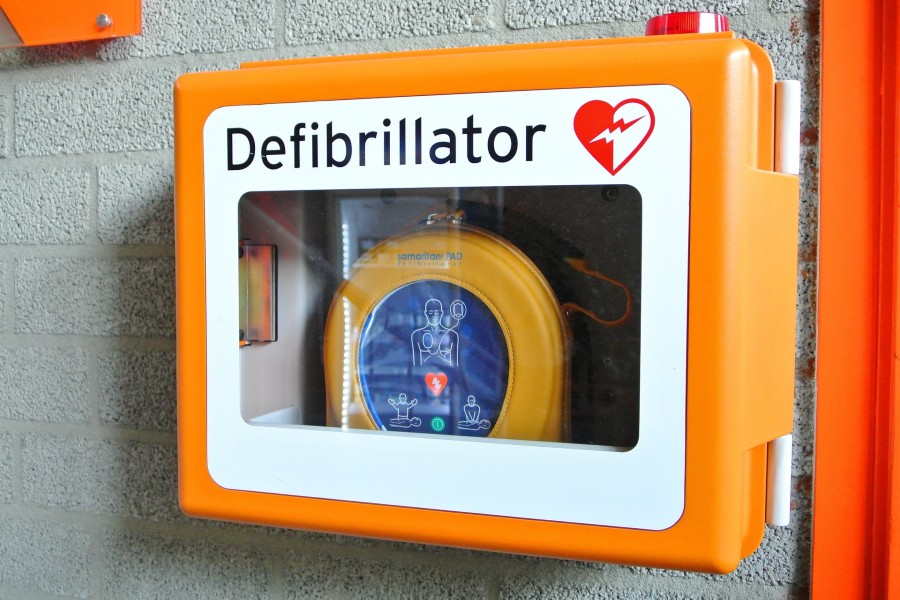
When installing an AED, choose a visible and accessible location and install clear signage that complies with legislative requirements. It should be in a central location within the business, near common areas, and not locked away in a cabinet or room.
Price:
Many larger-sized Aussie businesses have already installed AED’s in anticipation of it becoming
mandated at some point in the future. For smaller operators, the cost of an AED can be a barrier, particularly in today’s uncertain economic situation. There are a wide range of AED’s available and they do vary in price considerably. Do your research, because it’s possible to purchase a quality portable defibrillator for less than a thousand dollars – an insignificant amount when you think it might save the life of one of your members or colleagues.
Training:
Include procedures around the use of an AED in your workplace emergency response plan.
Ensure that all employees are aware of the defibrillator’s existence and how to use it by providing an induction. While formal training is not required to operate an AED, some basic
instruction and regular practice drills will help everyone feel more confident in the event of a sudden cardiac arrest emergency.
Maintenance:
To ensure the defibrillator is in proper working order, be sure to perform routine
maintenance as required. Additionally, it should be replaced every 8 years or more often according
to the manufacturer’s recommendations.
If you are considering installing an AED or you need assistance putting together risk assessments
including emergency response plans and procedures, you can contact FIRMC® for more information.

Fitness Cartel Maroochydore Reopens After $3.6 Million Rebuild
Fitness Cartel officially reopened its Maroochydore club on Saturday 25 July, capping off a $3.6 million refurbishment. Founder and CEO Nathan James spoke to What’s New in Fitness about the reinvestment, the new demographic it’s already drawing in, and what smaller gym operators can take from it. “Phenomenal,” is how James described reopening weekend. “We

Get Ready for the 2026 AusFitness Expo Sydney
This article was updated July 2026. Thinking about heading to AusFitness Expo Sydney in 2026? The countdown is well and truly on, with the festival of health, fitness and bodypower returning to ICC Sydney from Friday 11 to Sunday 13 September. Whether you’re all about lifting heavy, chasing a new personal best, or hunting down

Gear Up for AusFitness Industry Sydney 2026
This article was updated July 2026. The AusFitness Industry Trade Show & Summit is back at ICC Sydney on 11-12 September 2026, and for anyone working in the fitness business, it’s probably the most useful two days on the calendar. It’s the only dedicated fitness and wellness trade show in Australia, and it’s where gym

Marketing to Millennials For Gym Owners in Australia
Millennials are one of the largest and most commercially important audiences an Australian gym can reach. But a lot of the marketing advice built around this generation still pictures them as 20-somethings chasing the newest boutique class and posting about it. That’s a narrow slice of who this audience actually is today, and it leaves

Before You Open a Second Gym, Get These Financials Right
The gym is full, classes are booked out, and membership numbers are climbing. For many fitness business owners, this is the moment the idea of a second location starts to feel less like a dream and more like a logical next step. But momentum and readiness are two different things. Some of the most avoidable

Fuelling a New Era of Women in Fitness Industry Career Progression
Women in the fitness business Australia have long been the backbone of an industry they have rarely been invited to lead. Despite representing more than half of gym members and a significant share of the fitness workforce, women remain underrepresented at ownership and senior leadership level across the country. That conversation is getting louder in