

There’s a quiet crisis happening in gyms across Australia right now — and it has nothing to do with your pricing, your parking, or your app.
It’s a confidence crisis. And new global data suggests it’s one of the biggest drivers of gym member churn that operators consistently overlook.
The 2026 Global Fitness Report from Les Mills — drawn from over 10,000 respondents across five continents — paints a striking picture: strength training is exploding in popularity, but the people who want to do it are being stopped in their tracks by intimidation, confusion, and a lack of human guidance.
That’s not a programming problem. It’s a retention problem hiding in plain sight.
Gym Member Retention Data Every Australian Operator Should See
Before we get to solutions, look at what the research is actually telling us:
- 54% of aspiring lifters don’t know where to start
- 50% feel intimidated by the weights area
- 58% of current lifters say conflicting advice makes it hard to know how to train
- 33% of lifters still feel out of place on the gym floor, even at gyms that offer strength classes.
Now read those numbers through a retention lens. How many of your members quietly cancel not because your facility is bad, but because they never felt confident enough to make it a habit? How many trials don’t convert because the induction covered equipment safety but never addressed the fear of looking stupid in the weights area?
The demand for strength training is genuinely booming. Strength-based group formats are now the most popular studio category globally, growing from 30% of offerings in 2018 to 36% in 2025. The desire to lift is there. Members are just waiting for someone to make them feel like they belong.
Why Closing the Confidence Gap Is Your Best Retention Strategy
The instinct for many operators when they see this data is to think about programming — adding a beginners’ lifting class, redesigning the gym floor layout, investing in new equipment signage.
Those things matter. But they’re not the core solution.
The 2026 report is unambiguous: people want human-led coaching. Only 10% of adults prefer an AI coach over a human. What reduces gymtimidation — the report’s term for gym-floor anxiety — is human connection, clear coaching, and structured progression.
In other words, the single most effective gym member retention strategy available to Australian operators right now isn’t a new piece of software or a loyalty points scheme. It’s the quality and intentionality of your instructors and trainers on the floor.
Bryce Hastings, Les Mills Head of Research, frames it well: “The Instructor takes what we know from science and brings it to life for participants.”
When members feel genuinely guided and capable, they come back. When they feel lost or out of place, they cancel — and they rarely tell you why.
3 Member Retention Strategies You Can Implement This Month
Audit your new member experience through the eyes of a nervous beginner
Walk into your gym as if it’s your first time. Is there a human being (not just a sign) available to help in the weights area? Does your induction genuinely address fear and intimidation, or does it just cover equipment safety? The gap between those two things is often where your churn begins.
Brief your team on the confidence gap and make it part of their job description
Share the Les Mills data with your instructors and PTs. Make closing the confidence gap an explicit part of what great coaching looks like at your facility. The team members who understand they’re not just teaching movements — they’re building people’s belief in themselves — will fundamentally change how they interact with members who are on the fence about coming back.
Use coached group strength classes as your retention pipeline
The 2026 report highlights that coached group strength classes are specifically effective at building confidence for people who feel out of place on the gym floor. If you’re not already positioning your group strength timetable as the entry point for intimidated beginners — in your marketing, your front desk conversations, and your member onboarding flow — start now. It’s a natural retention funnel that already exists in your business.
The Gym Member Retention Opportunity Most Operators Are Missing
The fitness businesses that will grow through 2026 and beyond won’t necessarily be the biggest, the best-equipped, or the most tech-forward. They’ll be the ones that best understand what people actually need, not just to start exercising, but to keep going.
Right now, millions of Australians want to get stronger. They’re just waiting for someone to make them feel like they can.
Your instructors are that someone. Give them the brief, the support, and the recognition to do it well — and your membership numbers will follow.
Source: 2026 Global Fitness Report, Les Mills Asia Pacific. Based on 10,442 respondents across five continents. Download the full report free at lesmills.com.au/clubs-and-facilities/insight-hub/
Check out these articles:

Could Your Facility Become an Official RUN X™ Centre? Inside the World’s First Treadmill World Championship
A landmark partnership between Technogym and World Athletics is turning connected treadmills into a global competitive stage, and Australian fitness centres have a front-row seat. Running is already Australia’s most accessible sport. Parkrun draws tens of thousands of participants every Saturday morning. City2Surf sells out in minutes. Fun runs fill up months in advance. Australians

Follow the Money: Where Suppliers Are Betting in Australian Fitness
Interview conducted July 2026. Everyone in the fitness industry has an opinion on what’s trending. Fewer people are in a position to say where the money is going. Shaun Krenz is one of them. As co-founder of AusFitness Expo and AusFitness Industry, he spends most of the year building relationships with the suppliers, brands and
BFT PODIUM Series: The Event Model Driving Franchisee Revenue and Member Retention
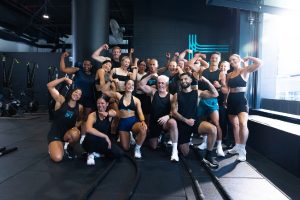
Body Fit Training (BFT) held the global launch of its PODIUM Series last weekend, on Sunday 2 August 2026, across 300+ studios in 10+ countries. The in-studio event series is designed to open up new revenue and improve member retention for franchise owners, with more than half of that global footprint based in Australia. To
Fitness Cartel Maroochydore Reopens After $3.6 Million Rebuild
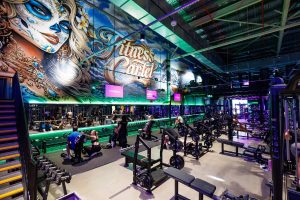
Fitness Cartel officially reopened its Maroochydore club on Saturday 25 July, capping off a $3.6 million refurbishment. Founder and CEO Nathan James spoke to What’s New in Fitness about the reinvestment, the new demographic it’s already drawing in, and what smaller gym operators can take from it. “Phenomenal,” is how James described reopening weekend. “We

Marketing to Millennials For Gym Owners in Australia
Millennials are one of the largest and most commercially important audiences an Australian gym can reach. But a lot of the marketing advice built around this generation still pictures them as 20-somethings chasing the newest boutique class and posting about it. That’s a narrow slice of who this audience actually is today, and it leaves

Why Australian Boutique Gym Members Leave… And What Owners Can Do About It
Acquiring a new fitness studio member costs significantly more than keeping an existing one. Most estimates put the ratio somewhere between five and seven to one. And yet the average boutique fitness studio in Australia spends far more on marketing and acquisition than it ever does on retention. The result is a leaky bucket. Studios

What Aussie Gym Owners and Fitness Professionals Should Know About Technogym BioStrength
Your members are showing up wanting to do strength training. Most of them have no idea how to do it properly for their goal. They pick a machine, do three sets of ten, scroll their phone during rest, and repeat. The rep range is arbitrary, the rest period is a guess, the tempo is an

Boutique Fitness Trends in 2026 and What They Mean for Australian Studio Owners
New research from boutique fitness management platform bsport surveyed more than 550 studio members globally to find out what drives discovery, loyalty and growth. The findings have significant implications for how Australian fitness businesses operate, market and grow. Running a boutique fitness studio in Australia has never been more competitive. New studios are opening constantly,

Why HYROX Training Is Reshaping the Australian Fitness Industry
More than 1.5 million people globally now compete in HYROX annually. In Australia, the race-style fitness format has moved well past early adopter status and into the mainstream, and the business of fitness is starting to reflect that shift in a serious way. Virgin Active Australia’s recently launched HYROX partnership gives the industry one of