
It’s common knowledge that your diet, sleep schedule and other important daily habits majorly affect your workout productivity. While these lifestyle choices have the greatest impact, many smaller aspects can come into play.
Here are seven lesser-known factors that could influence your workouts without your knowledge.
1. How genes affect your performance in the gym
You often hear people blaming bad genetics on their lack of progress, which has less of a scientific basis with one big exception — skeletal structure. Your bone length and density significantly alter your workout results, especially when performing compound movements like the squat, deadlift and bench press.
Shorter people don’t have to move their weight as far as taller people. A smaller stature generally gives you a mechanical advantage when lifting heavy loads. Taller people have longer limbs and must move the weight farther, so they have a harder time with most heavy exercises.
For example, people with long femurs often have difficulty squatting because their legs don’t allow for a smooth squatting motion. Similarly, people with narrow collar bones struggle with pressing exercises because their upper bodies don’t have a wide centre of gravity. If you struggle with certain exercises, your skeletal structure could be to blame.
Muscle insertions are another legitimate genetic factor that influence your workouts. Many beginners don’t realise their muscles are 100% unique. Humans have the same overall muscle structure, but every individual has different insertions, defined by where they attach to your bones and what shape they develop.
For example, a bicep muscle that attaches right at the elbow joint looks round and full, while a bicep muscle that attaches a few centimetres above the elbow looks smaller and narrower. This general principle applies to all muscle groups. Longer “muscle bellies” are stronger and easier to grow, while shorter ones are weaker and more difficult to grow.
Your insertions affect your ability to “activate” the targeted muscles during specific exercises. If you’re struggling to achieve that mind-muscle connection, you might need to isolate your muscles more using machines or cables instead of free weights.
2. Why proper breathing during exercise is important
Breathing is a subconscious bodily function for most of the day, but it suddenly becomes a conscious action during exercise. Your breathing technique is crucial for achieving maximum performance during workouts. The general idea is to inhale during the eccentric phase and exhale during the concentric phase of each exercise.
During cardio workouts, you’re supposed to inhale through your nose and exhale through your mouth at a slow and steady pace. This technique can help you avoid abdominal cramps and boost your endurance. You can’t just go through the motions — you must pay constant attention to your breathing technique, regardless of your workout.
3. Exercise and air quality
Think about the last time you were in a room with noticeably poor air quality. Your nose and throat were irritated, you had trouble breathing, and as a result you couldn’t concentrate on anything. Now imagine working out in a gym with similar air quality. A gym without proper ventilation can severely impede your performance.
Even minor exposure to airborne contaminants can cause immediate adverse reactions, including irritation, headaches, fatigue and allergic reactions. Nobody can complete a productive workout under these conditions. If you want to ensure a safe and breathable environment, consider taking your routine outdoors to get some fresh air.
4. How lighting could be a factor influencing your workout
Your gym’s lighting can also influence your workout performance because light directly impacts your mood throughout the day. A burst of sunlight can enhance your concentration and creativity, while darkness can stifle your cognitive function. Everyone has a better time exercising in the right state of mind, so lighting is a key aspect of your workout environment.
Most fitness facilities have large window walls to let in as much sunlight as possible. They also use special light fixtures such as recessed spotlights and track lighting to emphasise different exercise zones. Studies have shown that light sends messages that affect the body, mind, and mood. Different coloured light can have a different effect on these systems and in turn, our energy levels. If your gym doesn’t have adequate lighting, it’s time to go somewhere else.
Image showing custom lighting installation by Fitness Audio
5. Is your clothing affecting your performance during exercise?
Your choice of clothing can enhance or hinder your performance. Athletes are better off wearing compression clothing to reduce muscle oscillation and vibration during exercise, which reduces the risk of injury. Compression clothing also increases the blood circulation to your muscles, delaying lactic acid build-up and boosting your endurance.
Your workout clothes must fit your body proportions so you can move with full flexibility. They shouldn’t feel too constricting or irritating, and need to have good moisture-wicking properties so you stay cool and don’t get drenched in sweat. Comfort is more important than style when choosing athletic wear.
6. The correlation between music and exercise
The final two factors that can influence your workout are largely subjective, starting with music selection. Everyone has a unique taste in music. Some people get hyped up on loud rap or rock music during their workouts, while others prefer more relaxing genres or ambient sounds to improve their concentration.
No matter your personal preference, you can’t just listen to random songs during your workout — you need to put together a specific playlist that gets you in the right mood. Stick to the same genre or the handful of artists. Feel free to use this playlist made by fitness instructors as a launching point.
7. Your choice of social setting for your workout
The other subjective factor that influences your workout performance is the overall social setting. Some people don’t mind exercising in a crowded gym, while others can experience great anxiety in the same environment. Some gym environments are built around the collective energy of group training, particularly HIIT and dance fitness. It’s all about what makes you feel good.
If you prefer a quieter workout setting, try to train during off-peak hours so you avoid the crowds. Peak hours are between 5:00 p.m and 7:00 p.m. on weekdays, while weekends are more flexible. You could also try going with a friend to ease your anxiety and help you navigate the hectic environment.
Attention to detail pays off for optimum results
These seven lesser-known factors might not be as important as your exercise selection or eating habits, but they certainly play notable roles in your success. The most important part of leading a healthy lifestyle is consistency, so if you’re struggling with motivation, it could be worth addressing some of these factors to optimise your training.
Some new activewear, a banging playlist, and a different gym might make a big difference to your workout results. While some of these factors are within your control and some aren’t, paying attention to these small details will help you create the ideal training program and environment for long-term success. Each adjustment brings you one step closer to your goals.
Thanks to Oscar Collins for this article.
About the author:
Oscar Collins is the fitness editor at Modded, where he writes about fitness trends, nutrition, and similar topics.
Follow him on Twitter @TModded for frequent updates on his work.

Should You Be Recommending Acupressure Mats to Clients?
If you’ve been training clients for more than a few months, you’ve had the conversation: someone mentions they’ve started using a “spike mat” for their back, or they saw one on a mate’s Instagram story, and they want to know if it’s worth trying, or whether you’d recommend one yourself. Acupressure mats (also called spike

Snack Smart on the Snow: Why Pistachios Are a Winner for Active Clients
The Aussie ski season is underway across the Snowy Mountains, Falls Creek, and Mt Buller. If your clients are heading to the slopes, there’s a good chance their nutrition plan goes out the window the moment they hit the mountain. As a fitness professional, this is actually a great opportunity to have a simple, practical

Building Confidence and Calm Through Menopause-Informed Training
Written by Mish Wright When most people think of menopause, they picture hot flushes, night sweats, and maybe a few extra kilos around the middle. But what often gets left out of the conversation are the emotional and psychological shifts. Anxiety, irritability, low confidence, and mood swings are also a direct result of hormonal changes
Why HYROX Training Is Reshaping the Australian Fitness Industry
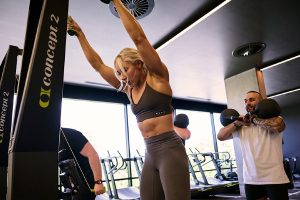
More than 1.5 million people globally now compete in HYROX annually. In Australia, the race-style fitness format has moved well past early adopter status and into the mainstream, and the business of fitness is starting to reflect that shift in a serious way. Virgin Active Australia’s recently launched HYROX partnership gives the industry one of
How Smart Gym Owners Are Turning the HYROX Boom Into a Retention Engine
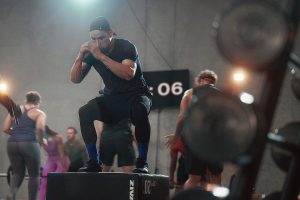
The Les Mills x HYROX partnership isn’t just big news for the fitness industry. For gym owners and fitness professionals across Australia, it’s a ready-made solution to one of the hardest problems in the business: keeping members engaged long enough to stay. Walk the floor of almost any commercial gym in Australia right now and

Fitesque: The New Dance Fitness Licensing Opportunity for Australian Studios
Walk into almost any fitness studio in Australia right now and you’ll find a familiar lineup: HIIT, reformer Pilates, yoga, and cycle. All solid. All proven. And all increasingly indistinguishable from the studio down the road. For studio owners and independent instructors, the challenge isn’t attracting fitness enthusiasts – it’s attracting people who have quietly
