
In the first of our series of articles which provides legal guidance for participants in the fitness industry, we’re sharing guidance from Meridian Lawyers, who regularly advise Fitness Professionals to help them understand their risks, roles and responsibilities in an increasingly litigious and regulated environment. In this article, Michael Bracken and Greg Bawden from Meridian identify some of the risks involved with operating as a sole trader.
Understanding legal risks as a fitness professional
Working as a fitness professional can be a rewarding career, but the responsibilities also carry a number of substantial and potential legal and business risks.
With Summer often bringing an increase in demand for the services of fitness professionals, now is a good time to check that you, and your business, are well protected. Let’s address some common questions we get asked.
Am I at risk as a sole trader?
It is not uncommon for fitness professionals to operate their business as a sole trader as this structure has a number of advantages, being relatively cheap to establish, offering autonomy in decision making and it is easy to administer which makes it an attractive option.
However, a sole trader business structure also carries with it the obligation of unlimited personal liability and lacks some of the benefits of other corporate structures in circumstances where your business or sources of income grow.
Corporate or company structures can provide an opportunity to limit some legal liabilities and by not having the benefit of limited liability a sole trader is personally responsible, without a limit, for the debts of the business and any claims made against the business. This means that all of your personal assets, including any assets jointly-owned with another person, such as a house, may be at risk should a claim be made against you.
What about personal liability exposure?
There are a range of business and legal risks which fitness fitness professionals must navigate.
In one example which occurred in 2017, a personal trainer, and franchise gym where he worked, made news headlines when the gym was sued for $200,000 by a client who had to spend a week in hospital after being injured during his training session, despite complaining about feeling unwell during his session. To make matters worse, the gym claimed that the uninsured personal trainer was not its employee, and therefore could be personally liable for any damage.
This example and other similar cases, illustrate how important it is to take precautions to protect yourself, and be proactive, as good intentions will not be enough.
Steps to lower your legal risk as a fitness professional
1. Assess and be aware of the legal risks, know your legal responsibilities, and the legal standard to which you are required to perform including professional standards and guidelines. Overall, know your client and manage the legal risk having regard to the client profile.
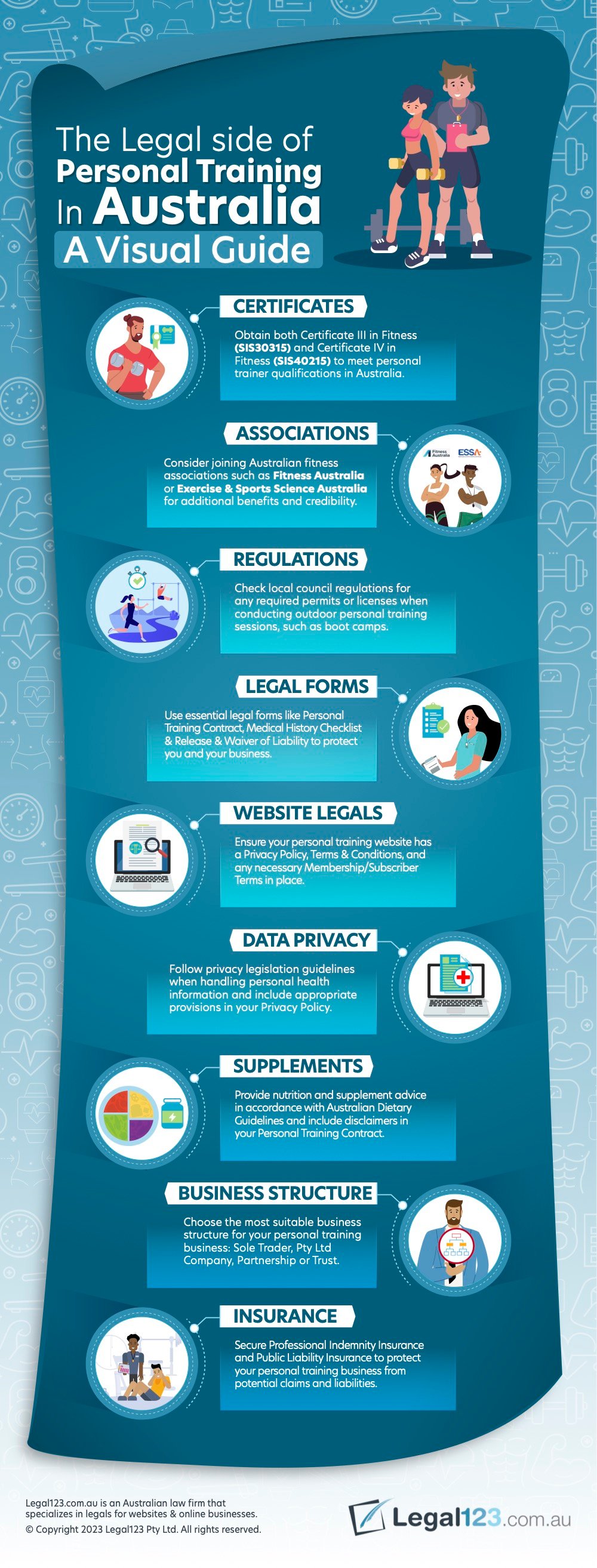
2. Use a simple written contract containing terms and conditions which clearly describe your services, responsibilities and the limits. Do not rely on unstructured or verbal assurances to determine your obligations.
3. Ensure that all agreements or arrangements with others (partners, employees & contractors, franchisees) are properly documented; and before signing anything, make sure that written documents accurately represent any verbal agreement reached.
4. Be vigilant with your clients on an ongoing basis – keep monitoring and ensure you stay informed.
5. Be adequately covered for your business and personal risk by taking out the appropriate insurances, such as professional indemnity and public liability insurance.
6. When in doubt, seek legal assistance and advice. Just like people seek your help with their health and fitness needs and goals, referring to experts is always advised.
7. Keep accurate records of all correspondence, documentation and agreements. This would includes any email correspondence.
Fitness industry professionals have a duty of care to their clients and must follow professional standards and guidelines.
Meridian Lawyers can help you to manage the risks, understand the regulations that may apply to your business and provide clarity when considering your business structure and contracts.
Meridian Lawyers corporate and commercial legal team has dedicated expertise in the health and fitness industry and regularly advises gym businesses and fitness professionals on a range of matters such as:
- Professional negligence and public liability claims
- Complaints and demands for compensation
- Business restructures and advice on business and asset protection
- Regulatory issues relevant to fitness professionals and businesses
- Franchise and employment agreements and other contractual matters.
Article written by Michael Bracken and Greg Bawden from Meridian Lawyers for the What’s New in Fitness Magazine – Summer 2017 Edition.
Check out these articles:

A Guide to Understanding Music Licensing For Fitness Businesses
The soundtrack of a fitness business does more than fill silence. It sets pace in a HIIT block, softens the edges of a busy floor, and helps a new member feel like they belong. It is also, in Australia, a legal and operational choice. If you play commercially available music in a business, you are

The Plus Fitness Playbook To Successful Scaling
The opening of Plus Fitness Mambourin last month marked a milestone for the brand, which has seen its trajectory turbo-charge since its 2020 acquisition by ASX-listed company Viva Leisure. Mambourin marks 200 clubs opened with around 200,000 members and more sites in the pipeline across Victoria and New South Wales. For Australian gym owners, a

Merchandising for Gyms: A Smart Strategy for Member Retention in 2025
A few years ago, it wasn’t the norm for gyms to sell things like protein powders and branded t-shirts. Today, gyms are more than just gyms — they’re brands. If you’ve created a community at your gym that makes people feel like they belong, the place where they train becomes a part of their identity.

6 Selling Tips To Make Your Business Boom in 2025
Let’s get one thing straight – selling doesn’t have to feel pushy, sleazy, or awkward. If you’re a gym owner or personal trainer, you’re already in the business of transformation. Now it’s time to transform how you sell. Vanessa from Top Gong Digital Marketing shares six selling tips to make business boom for you. Redefining

Take Advantage Of 2025 EOFY Sale On Commercial Gym & Fitness Equipment
With June 30 fast approaching, fitness business owners across Australia are preparing to wrap up the financial year, which means it’s the perfect time to upgrade your gym setup. There are numerous reputable suppliers with a sale on commercial gym and fitness equipment. Smart investments now could be fully tax-deductible, giving your business a financial

3 Fitness Products You Should Have In Your Gym in 2025
The Aussie thirst for gym facilities is as strong as ever and the greatest challenge for fitness business owners is retaining members in a highly competitive market. There are some pieces of equipment that you could expect to find in pretty much any fitness centre, such as weight plates, dumbbells and cardio machines, but what

Australian Fitness Industry Awards Open Nominations For 2025
The AUSactive National Awards celebrate the incredible work being done across the active health and exercise industry in Australia. Formerly known as the Fitness Australia Awards, they shine a spotlight on both individuals and organisations making a real difference – those leading the way, inspiring, and helping create healthier, more active communities. These prestigious Australian

Top Tips For Gym Flooring Design in 2025
From the arrangement of cardio equipment down to the colour of the walls, Juliana Mare chats to design experts to find out their top tips for gym floor design to maximise functionality and member enjoyment. The importance of gym flooring design for member retention What convinces a person to join a gym? Of course, factors

If You Haven’t Moved To Cashless Gym Vending Machines, Now Is The Time
In 2025’s fitness landscape, the integration of cashless vending machines in gyms across Australia is gaining momentum. These machines offer a seamless blend of convenience and functionality, benefiting both gym owners and members. In the past, smaller gyms faced unique challenges when considering the installation of vending machines due to coin and banknote payment systems